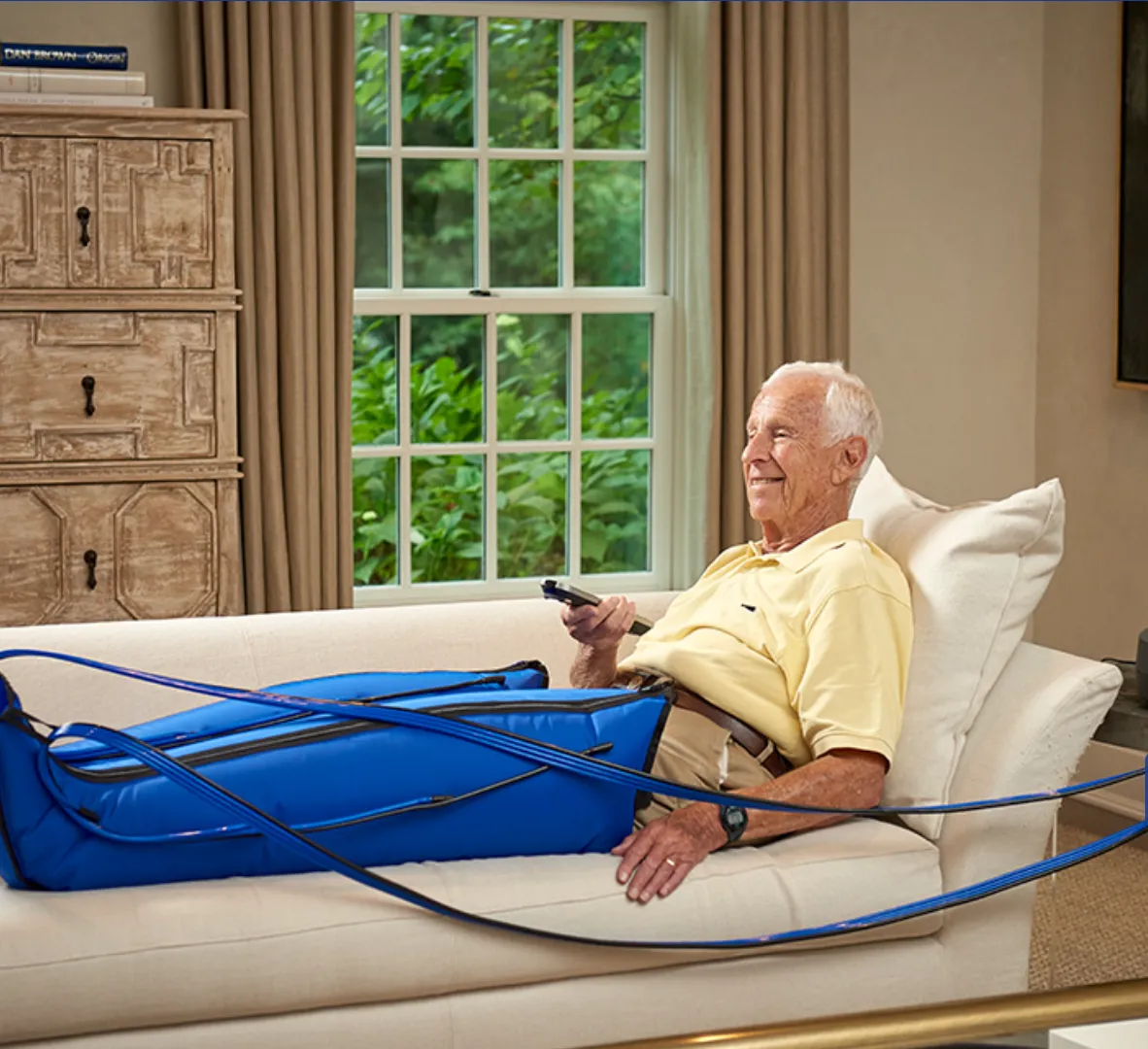
How to Use a Lymphedema Pump at Home: How Often & How Long
You've got your lymphedema pump home, and the practical questions start: how often can I use it, how long should each session be, and am I doing it right?
The short answer: Use your pump exactly as your clinician prescribed. For most home plans that means a session of roughly 30 to 60 minutes, once or twice a day, at the pressure your prescriber set — but your treatment plan is the one that counts, because Medicare and your clinician define the pressure, frequency, and duration for your specific case. More pressure or more time is not better, and skipping the compression garment you wear between sessions is the single most common reason a pump seems to stop working. The routine itself is simple: inspect your skin, apply the garment, run the prescribed cycle, then put your daytime compression back on to hold the result.
This guide covers how often and how long to use the pump, a step-by-step home routine, the mistakes that quietly stall progress, and when not to use it at all.
This article is for patients using a pneumatic compression pump at home and the caregivers helping them. For the device options we fit locally, see our lymphedema therapy page, or ask Lumi, our 24/7 chatbot, at the bottom right of every page on mcbdme.com.
The Quick Answer (for the patient skimming on their phone)
How often: As prescribed — commonly once or twice a day. Consistency matters more than intensity.
How long: As prescribed — commonly 30 to 60 minutes per session.
What pressure: The setting on your prescription. Higher is not better and can be counterproductive.
The cardinal rule: Wear your compression garment between sessions. The pump moves the fluid; the garment keeps it from coming back.
Don't use it on infected or broken skin, or during a flare of cellulitis or a suspected blood clot, until your clinician clears you.
Pair it with movement and skin care — the pump is one part of your overall plan, not the whole plan.
Everything below explains the routine and the pitfalls.
How Often Should You Use a Lymphedema Pump?
The honest answer is the one your prescription gives you, and that's not a dodge. Under Medicare's National Coverage Determination 280.6, a covered pump comes with a treatment plan that defines the pressure to be used and the frequency and duration of use, set by your physician and monitored over time. That's because the right schedule depends on your diagnosis, your stage, the limb involved, and how your tissue responds.
That said, many home plans land in a familiar range: once or twice daily. The principle that matters is consistency. Lymphedema management rewards a steady daily routine far more than occasional long sessions. Using the pump only when the limb looks swollen is one of the most common mistakes, because by then you're chasing fluid that a regular routine would have kept moving.
How Long Should Each Session Be?
Again, follow your prescription, but 30 to 60 minutes per session is a commonly prescribed window. Longer is not automatically better; beyond the prescribed time you get diminishing returns and, at excessive pressure or duration, you can irritate skin or overload tissue. If you feel like you need much longer sessions to get the same result, that's a reason to call your clinician and reassess the plan, not to quietly double your time.
Set yourself up to actually relax for the session: a supported chair or bed, the limb comfortable, a show or a podcast queued up. A calm, consistent session done daily beats a rushed marathon done twice a week.

How to Use Your Lymphedema Pump: Step by Step
A typical home session looks like this. Always defer to the specific instructions your fitter and clinician gave you for your device.
1. Check your skin first. Look the limb over for cuts, rashes, redness, or signs of infection. If something looks off, skip the session and call your clinician.
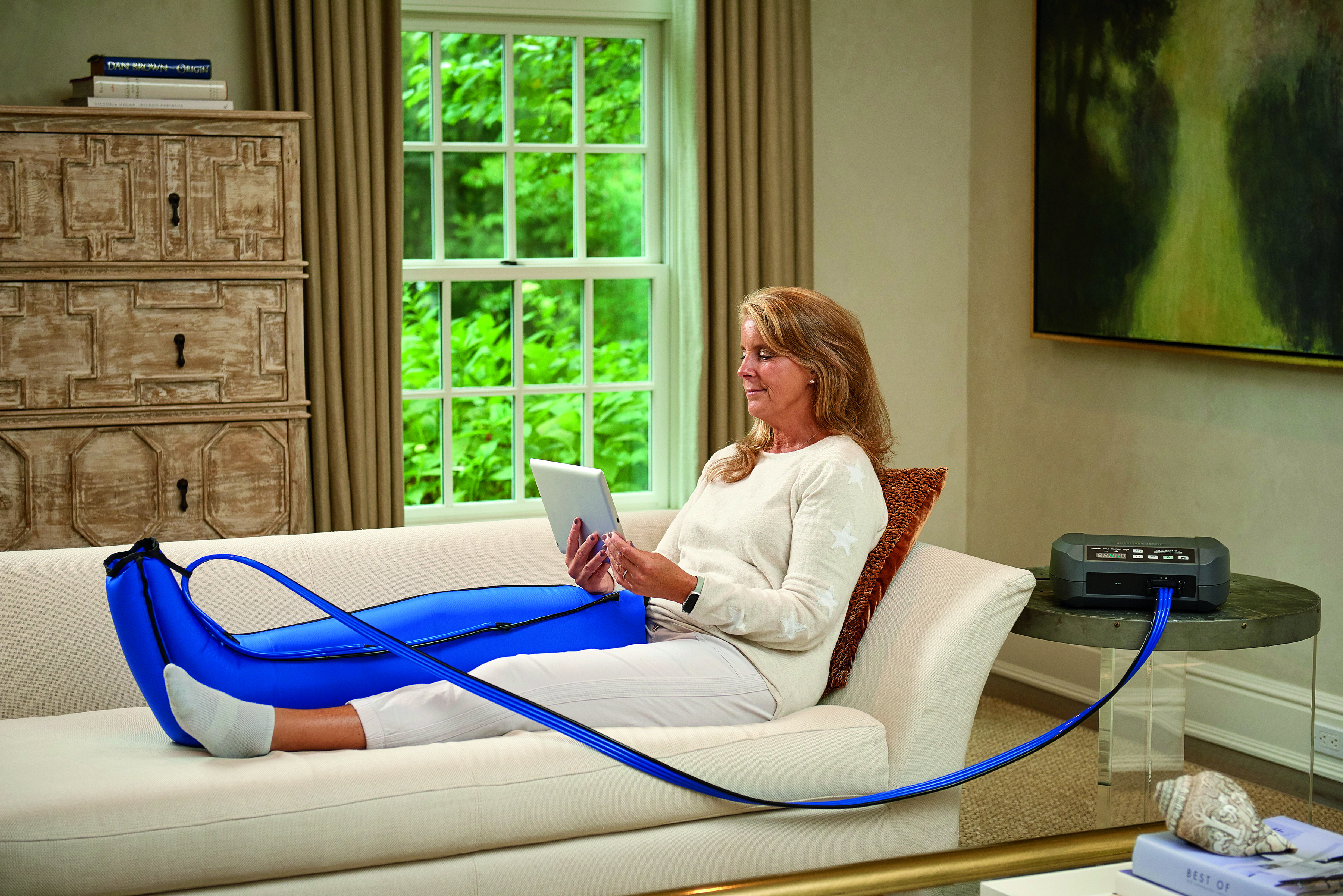
2. Get comfortable and support the limb. Sit or lie down with the limb relaxed and supported. You'll be still for a while.
3. Apply the garment correctly. Slide on the sleeve or boot, line it up as you were shown, and smooth out wrinkles and bunching. A twisted or wrinkled garment creates uneven pressure.
4. Set the prescribed pressure and time. Enter the settings from your prescription. The pressure should feel firm but never painful.
5. Run the cycle and relax. Let the chambers inflate and deflate through the full cycle. You should feel a comfortable, milking pressure. Pain, numbness, tingling, or color changes mean stop and check in with your clinician.
6. Remove and inspect. Take the garment off, look at the skin again, and moisturize if your routine includes it.
7. Put your compression garment back on. This is the step people skip. Your daytime garment (or nighttime garment, depending on the time of day) holds the fluid reduction the pump just achieved.
We break down how the device actually moves fluid in How Does a Lymphedema Pump Work?, and how garments fit into the plan in Nighttime Compression Garments for Lymphedema.
Common Mistakes That Stall Your Results
Turning the pressure up. More pressure is not more progress. Excess pressure can compress superficial lymphatics and irritate skin. Use the prescribed setting.
Skipping the between-session garment. The pump moves fluid; compression keeps it from refilling. Without the garment, much of each session is undone by the next day.
Only using it when swollen. Reactive, on-and-off use never builds the steady control that daily routine does.
Wrinkled or poorly fitted garments. Bunching creates pressure points and uneven results. Smooth it out; if the fit is wrong, get refitted.
Ignoring skin care and movement. The pump is one piece of complete decongestive therapy, alongside skin care, exercise, and manual techniques. We cover the movement side in Mobility and Lymphedema: Movement Is Medicine and the hands-on side in Manual Lymphatic Drainage Therapy.
Pushing through warning signs. Pain, numbness, tingling, increased swelling, or skin color changes are signals to stop and call, not to tough out.
When You Should NOT Use Your Lymphedema Pump
Pump therapy isn't appropriate in every moment. Hold off and check with your clinician if you have any of the following until you're cleared:
An active skin infection (cellulitis) in the limb — redness, warmth, fever.
Broken, weeping, or unhealed skin where the garment would sit.
A suspected or known blood clot (DVT) in the limb.
Acute heart failure symptoms or other conditions your clinician flagged, since moving a large volume of fluid can matter for the heart.
This isn't the full contraindication list, and it's not a substitute for your clinician's guidance — it's the short version of "when in doubt, ask before you run the pump."

A Few Things a Pump Is NOT
It is not a replacement for compression garments. It works with them, not instead of them.
It is not a "more is better" device. Prescribed pressure and time, consistently, beats cranking it up.
It is not a standalone cure. It's part of a complete plan that includes skin care, movement, and sometimes manual lymphatic drainage.
It is not the same as an arterial pump. Pumps for peripheral arterial disease work differently — see our arterial compression therapy page.
Frequently Asked Questions
How often can I use my lymphedema pump? Use it as your clinician prescribed — commonly once or twice a day. Your treatment plan sets the frequency for your specific case, and consistent daily use matters more than occasional long sessions.
How long should each lymphedema pump session be? Commonly 30 to 60 minutes, but follow your prescription. Longer sessions don't add benefit and, at excessive time or pressure, can irritate skin. If you feel you need much longer to get the same result, call your clinician to reassess.
Can you use a lymphedema pump too much? Yes. More frequency, time, or pressure than prescribed can irritate skin and isn't more effective. Stick to your plan, and report any pain, numbness, tingling, or skin color changes.
What pressure should a lymphedema pump be set to? The pressure on your prescription. It should feel firm but never painful. Higher settings are not better and can be counterproductive, so don't increase pressure on your own.
Do I still need compression garments if I use a pump? Yes — this is the big one. The pump moves fluid out; your compression garment keeps it from coming back between sessions. Skipping the garment is the most common reason a pump seems to stop working.
When should I not use my lymphedema pump? Avoid it during an active skin infection, over broken or unhealed skin, with a suspected blood clot, or if your clinician has flagged a heart or other condition — until you're cleared. When in doubt, ask before running it.
How does a lymphedema pump work? It uses a garment with one or more chambers that inflate and deflate in a cycle, gently moving lymph fluid out of the swollen limb toward areas that can drain it. We explain it in detail in our how-it-works guide.
How soon will I see results? Many people notice softening or reduced swelling within the first weeks of consistent use, but lymphedema is a chronic condition that's managed over time, not cured in a few sessions. Steady routine and garment use are what hold the gains.
Key Takeaways
Use your pump exactly as prescribed — commonly once or twice daily, about 30 to 60 minutes per session, at the prescribed pressure.
Consistency beats intensity; daily routine outperforms occasional long sessions.
Always wear your compression garment between sessions — it's what holds the result.
Don't use the pump on infected or broken skin, during a flare, or with a suspected clot until your clinician clears you.
Higher pressure and longer time aren't better and can irritate skin; warning signs mean stop and call.
The pump is one part of complete decongestive therapy, alongside skin care, movement, and garments.
Next Steps
If your pump routine isn't delivering the results you expected, the fix is usually in the details — fit, pressure, consistency, and the between-session garment. MCB DME can help you troubleshoot and make sure your equipment and garments are right.
Patients: Visit our lymphedema therapy page or our compression therapy overview, or contact our team if your pump or garment needs attention. For quick questions, ask Lumi (24/7 chatbot, bottom right of every page on mcbdme.com).
Referring clinicians: Visit our providers page for fitting, training, and documentation support. See also When to Refer a Patient for a Lymphedema Pump.
Related Resources:
External references (authoritative sources):
MCB DME is a durable medical equipment provider based in Hawthorne, New Jersey, specializing in lymphedema management, compression therapy, arterial compression, bracing, diabetic and orthopedic footwear, and prosthetics. MCB DME is a Medicare-enrolled DMEPOS supplier and bills Medicare, Medicaid, and most commercial insurance plans directly for covered items.
Disclaimer: This article is for educational purposes only and is not a substitute for professional medical advice. Pump pressure, frequency, and duration are individualized; always follow your clinician's prescription and your device's instructions, and contact your provider with any concerns.