How Does a Lymphedema Pump Work? The Anatomy of a Pneumatic Compression Device
If your clinician has recommended a lymphedema pump (also called a pneumatic compression device, or PCD), it helps to understand what you are actually putting on your limb and what it is doing under the sleeve. The device can look intimidating the first time you see it: a control unit, a tangle of tubes, and a long inflatable garment. It is simpler than it looks.
The short version: a lymphedema pump is an air compressor connected to a garment made of overlapping chambers. The pump inflates those chambers in a timed, repeating sequence to gently push stagnant lymph fluid out of a swollen limb and toward the parts of your body where your lymphatic system can drain it normally. That is the whole idea, mechanical assistance for a lymphatic system that can no longer keep up on its own.
This article is written for patients managing lymphedema or lipedema, their caregivers, and referring clinicians who want a clear resource to share. For our local product details, see our lymphedema therapy page. For quick questions, Lumi, our 24/7 chatbot, is available at the bottom right of every page on mcbdme.com.

The Quick Answer (for the patient skimming on their phone)
What it is: A pump unit (air compressor) plus an inflatable garment with multiple overlapping chambers.
What it does: Inflates those chambers in sequence to move lymph fluid out of the swollen limb toward healthy drainage points.
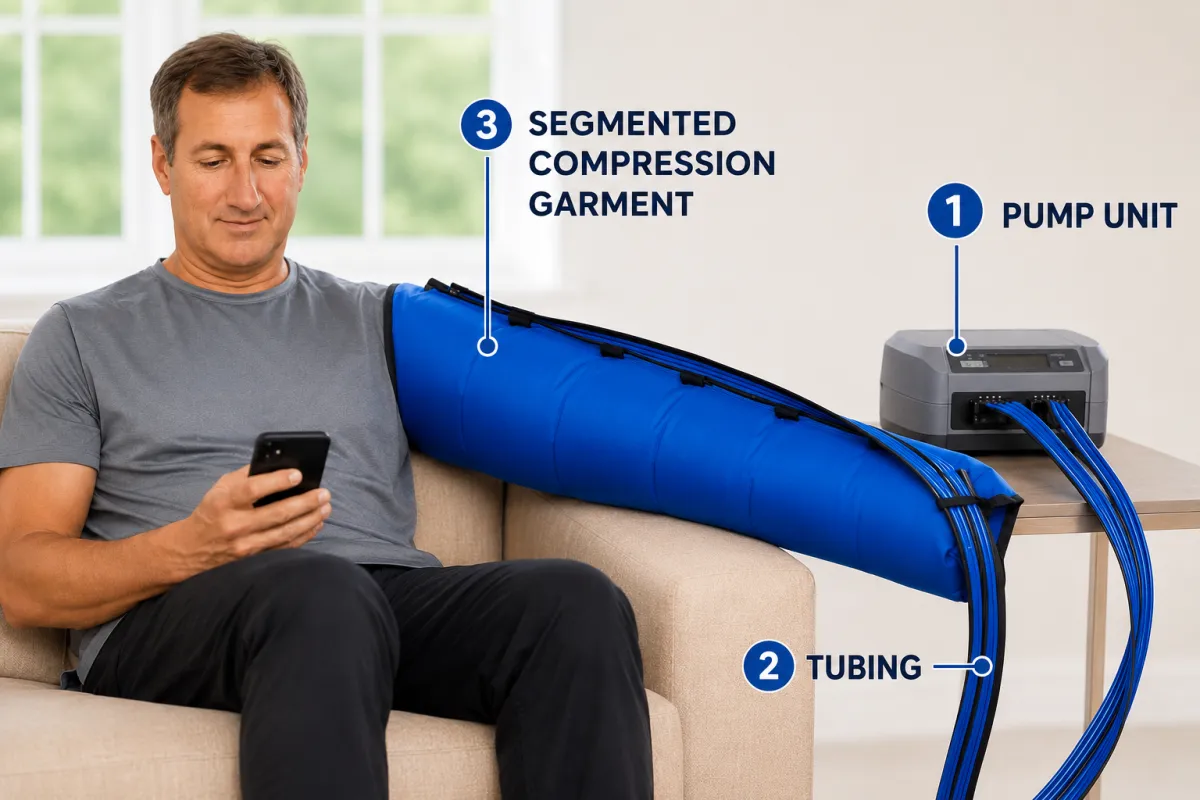
The three main parts: The pump/control unit, the connector tubing, and the appliance (sleeve, boot, or vest).
Why "sequential" matters: Good pumps inflate from the far end of the limb inward, like squeezing a tube of toothpaste from the bottom up, so fluid moves the right direction.
The device types: Medicare recognizes three (HCPCS E0650, E0651, E0652), from basic single-chamber to advanced calibrated-gradient devices.
Everything below explains the how and the why.
The Three Main Parts of a Lymphedema Pump
Every home lymphedema pump, regardless of brand, comes down to three components working together.
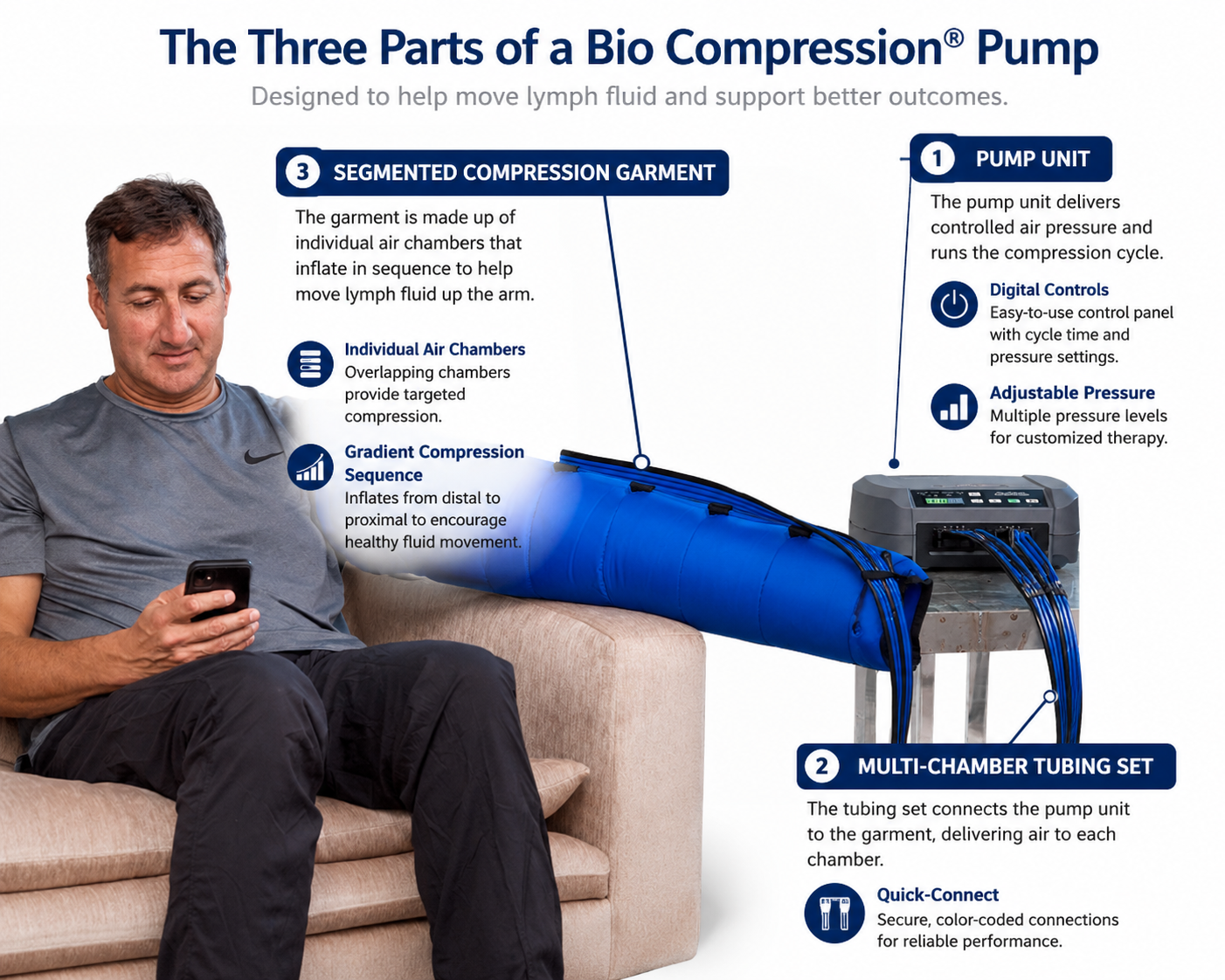
1. The pump unit (the control unit). This is the box that sits on a table or the floor beside you. Inside is a small air compressor, a set of valves, and a controller that times everything. The front panel is where you set the pressure, choose a program or cycle, and set the session length. On more advanced devices, the panel lets a clinician adjust individual chambers. The unit is what makes the device a pneumatic compression device. Pneumatic simply means "powered by air."
2. The connector tubing. A bundle of flexible air hoses runs from the pump unit to the garment. Each hose feeds one chamber (or one group of chambers) in the appliance. When you hear a pump described as "single-chamber" versus "multi-chamber," the tubing is part of what makes that difference possible: a multi-chamber garment needs multiple independent air lines so the unit can inflate one section at a time rather than all at once.
3. The appliance (the garment). This is the inflatable sleeve, boot, or vest you actually wear. It wraps the affected limb or body region and contains the air chambers. Appliances are made in different shapes for different anatomy: a full-leg garment, a half-leg or foot-to-knee boot, an arm sleeve, or a chest and trunk garment for truncal or breast-cancer-related lymphedema. Fit matters enormously here. A garment that is too loose cannot deliver even pressure, and one that is too tight can be uncomfortable or counterproductive.
How the Chambers Actually Move Fluid
Here is where the design gets clever, and where understanding the mechanism helps you trust the therapy.
Your lymphatic system is a network of tiny vessels that collect excess fluid from your tissues and return it to your bloodstream. Unlike your heart-driven blood circulation, the lymphatic system has no central pump. It relies on muscle movement, breathing, and one-way valves to push lymph along. When that system is damaged, by cancer surgery, radiation, a congenital malformation, chronic venous disease, or injury, fluid backs up in the limb. That backed-up fluid is lymphedema. Mayo Clinic describes the pump version of this therapy as sequential pneumatic compression: a sleeve connected to a pump that intermittently inflates to move lymph fluid away from the fingers or toes.
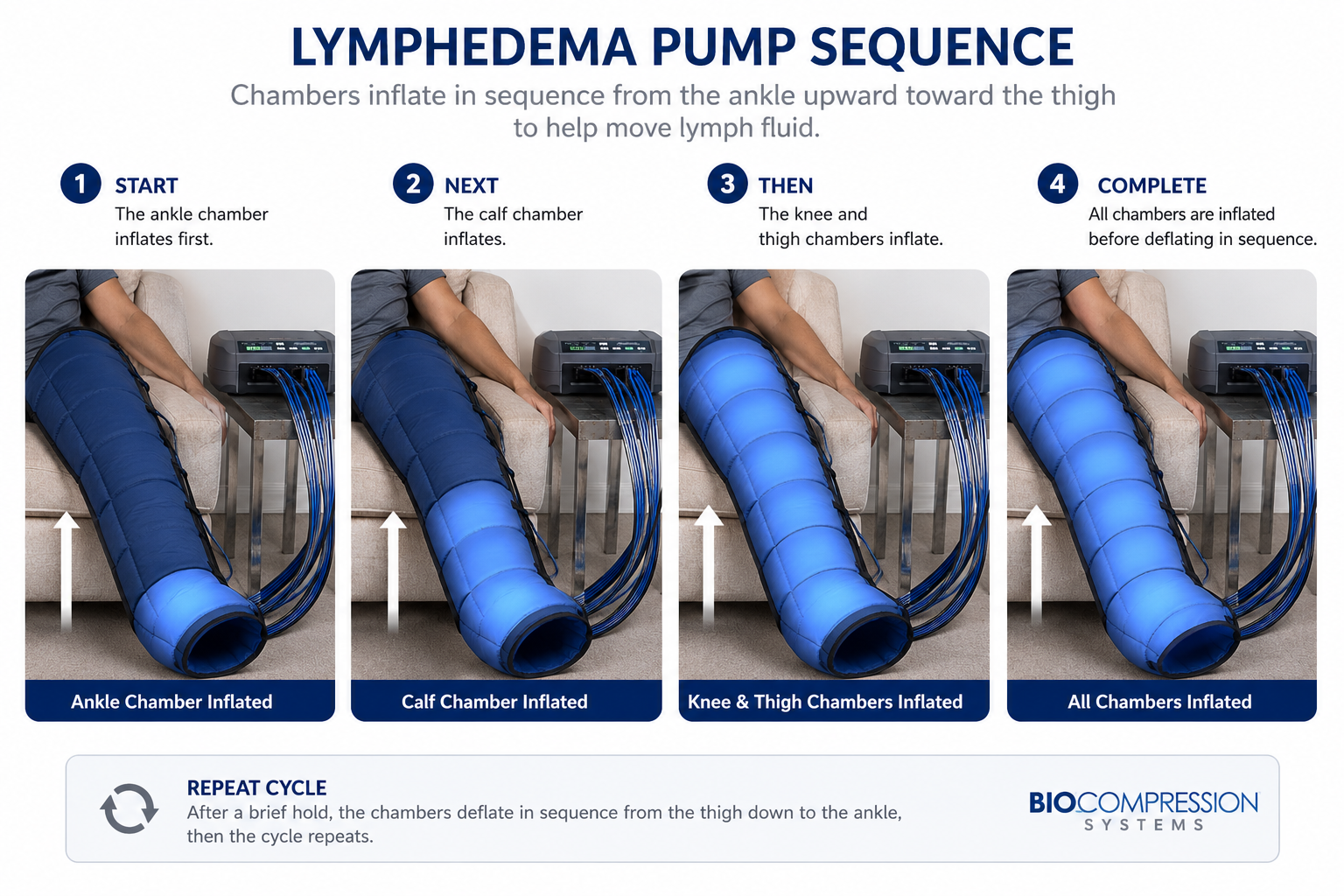
A lymphedema pump substitutes for the muscle action your lymphatic system is missing. The garment's chambers inflate in a deliberate sequence, almost always starting at the part of the limb farthest from your heart (your hand or foot) and progressing toward the trunk. As each chamber inflates, it gently compresses the tissue beneath it and nudges fluid in one direction: inward and upward, toward the lymph nodes and healthy vessels that can still drain it.
Think of it like squeezing a tube of toothpaste. If you squeeze from the bottom and work up, the contents move toward the opening. If you squeeze randomly in the middle, you make a mess and accomplish little. A well-designed sequential pump always squeezes from the bottom up.
Once a full cycle completes, the chambers deflate, the tissue rests for a moment, and the cycle repeats. Over a 30-to-60-minute session, the limb goes through this inflate-rest-repeat rhythm many times, steadily clearing fluid that would otherwise sit and accumulate.
Single-Chamber vs. Multi-Chamber vs. Calibrated-Gradient
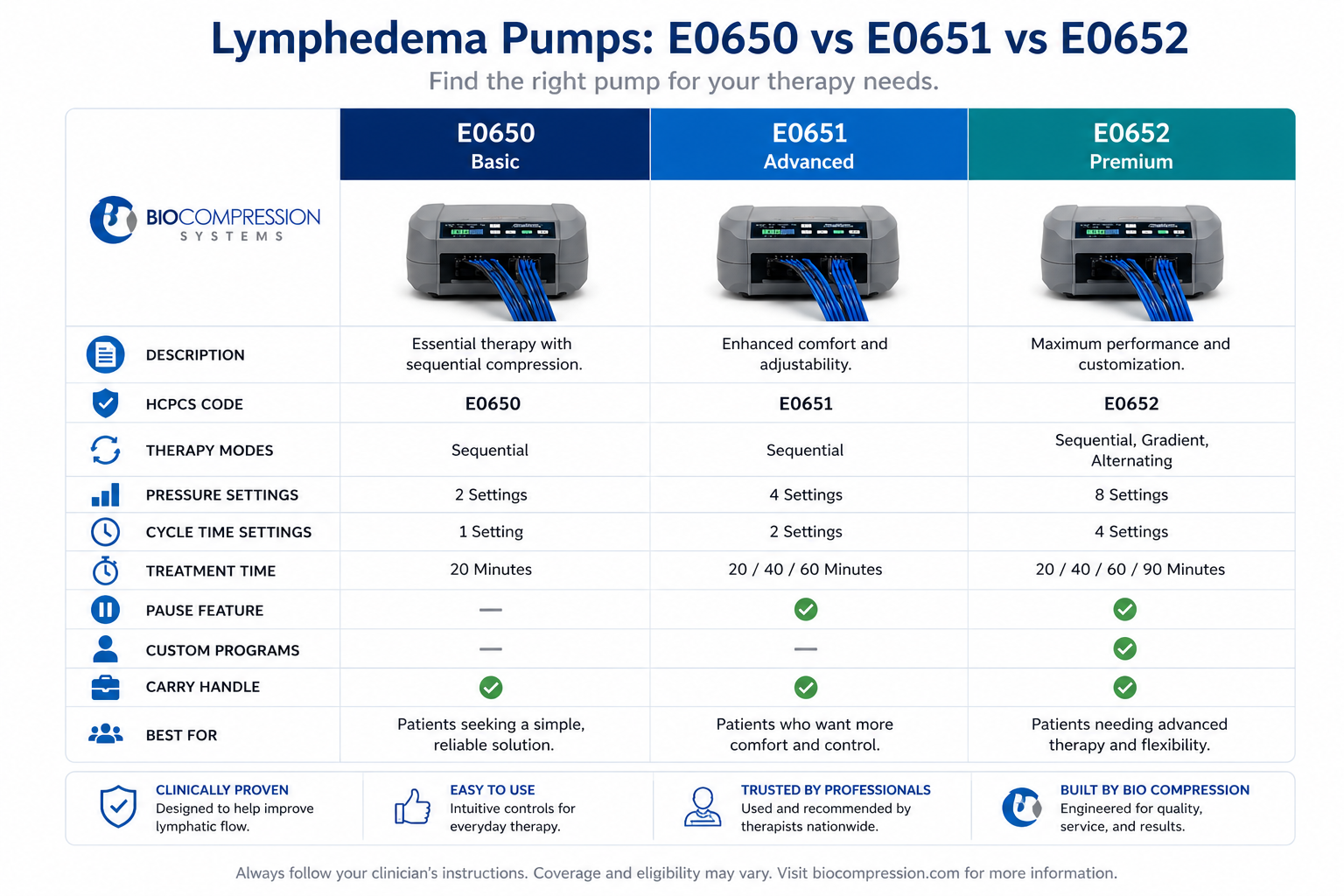
Not all pumps move fluid equally well, and the differences are reflected in how Medicare classifies them. There are three HCPCS codes, and the jump between them is mostly about how precisely the device controls pressure across the limb.
E0650 — Non-segmented (single-chamber) pump. The garment is essentially one big chamber that inflates all at once, squeezing the whole limb at the same time. It provides compression but cannot create the directional, bottom-up wave that segmented devices can. These are the most basic devices.
E0651 — Segmented pump without calibrated gradient pressure. The garment has multiple chambers that inflate in sequence, creating the directional wave described above. However, the pressure in each chamber is not individually calibrated, the device delivers the same target pressure to each segment as it cycles. This is a meaningful step up from single-chamber for most patients.
E0652 — Segmented pump with calibrated gradient pressure. The advanced category. These devices have multiple chambers and let the clinician set and adjust the pressure of individual chambers, allowing a true graduated pressure profile (higher at the far end of the limb, tapering as it moves inward) and the ability to work around sensitive areas, scar tissue, or genital and truncal swelling. Calibrated-gradient devices are typically reserved for patients with more complex presentations where the prescribing clinician documents that a simpler device is not sufficient.
Which one is right for you is a clinical decision driven by your diagnosis, the body region involved, and your prescriber's judgment, not by which device is fanciest. Medicare's National Coverage Determination 280.6 spells this out: the advanced E0652 device is covered only when a patient has unique characteristics that prevent satisfactory treatment with a simpler device. We compare specific brands in our lymphedema pump comparison, and cover the practical and coverage differences in our compression therapy overview.
What the Pump Is NOT
Because "pump" and "compression" are broad words, it is worth clearing up a few common mix-ups.
It is not an arterial pump for PAD. Pumps used for peripheral arterial disease work very differently, with different pressures, cycle speeds, and HCPCS codes. They are not interchangeable with lymphedema pumps. See our arterial compression therapy page for the contrast.
It is not a replacement for your compression garment. The pump produces gains during a session; your daytime garment holds those gains the rest of the day. They work as a team, not as substitutes.
It is not a one-time cure. The pump assists a lymphatic system that cannot fully recover. It manages a chronic condition the way a CPAP machine manages sleep apnea, ongoing, not once-and-done.
It is not "the harder the squeeze, the better." Lymphatic vessels are delicate and sit close to the skin. Effective pressures are gentler than most people expect. More pressure is not more therapy, and excessive pressure can be counterproductive or uncomfortable.
Where the Pump Fits in Your Overall Care
A lymphedema pump is one tool inside what clinicians call complete decongestive therapy (CDT). CDT also includes compression garments and bandaging, manual lymphatic drainage performed by a certified therapist where appropriate, exercise, and meticulous skin care. Leading lymphedema resources treat pneumatic compression as one piece of that program, not a standalone fix.
Patients who combine the pump with the rest of the plan reliably outperform patients relying on the pump alone. The pump is excellent at what it does, moving fluid, but holding those results requires the garments, movement, and skin care that surround it. For the garment side of maintenance, see our companion guide on nighttime compression garments for lymphedema.
When to Call Your Clinician or DME Provider
The pump should feel like a firm, comfortable, rhythmic squeeze. Reach out promptly if you experience any of the following:
New or worsening pain during sessions,
New numbness, tingling, or skin color changes,
Increased swelling above the cuff (proximally) during or after sessions,
Open wounds, blisters, or skin breakdown under the garment,
Signs of infection (redness, heat, fever, red streaks, rapidly worsening swelling), which can indicate cellulitis and need urgent medical attention,
A garment that no longer fits, leaks air, or has a chamber that will not inflate.
For day-to-day questions about your specific MCB DME equipment, fit, or settings, Lumi (our 24/7 chatbot at mcbdme.com) can route you to the right resource between appointments.
Frequently Asked Questions
How does a lymphedema pump actually move the fluid? The garment's air chambers inflate in a timed sequence, usually starting at the hand or foot and progressing toward the trunk. Each inflation gently compresses the tissue and pushes lymph fluid in one direction, toward the lymph nodes and healthy vessels that can drain it, mimicking the muscle action a healthy lymphatic system relies on.
What are the parts of a lymphedema pump? Three: the pump (control) unit that compresses and times the air, the connector tubing that carries air to the garment, and the inflatable appliance (sleeve, boot, or vest) you wear on the affected area.
What is the difference between an E0650, E0651, and E0652 pump? These are the HCPCS codes Medicare uses. E0650 is non-segmented (single chamber). E0651 is segmented (multiple chambers in sequence) without calibrated gradient pressure. E0652 is segmented with calibrated gradient pressure, the advanced devices that allow individually adjustable chamber pressures. The right choice depends on your diagnosis, body location, and prescriber's judgment.
Why do the chambers inflate in a specific order instead of all at once? Sequential inflation creates a directional wave that moves fluid the way your lymphatic system would, from the far end of the limb toward your body's core. A single chamber that inflates all at once squeezes the limb but cannot create that directional movement, which is why segmented devices are generally preferred when clinically appropriate.
Does it hurt? How much pressure does it use? It should not hurt. Effective lymphatic pressures are gentler than most people expect, because lymphatic vessels sit close to the skin. The session should feel like a firm, comfortable, rhythmic squeeze. Pain is a signal to stop and call your clinician or DME provider.
Is a lymphedema pump the same as an arterial pump? No. Arterial pumps for peripheral arterial disease use different pressures, cycle speeds, and HCPCS codes and are not interchangeable with lymphedema pumps.
Key Takeaways
A lymphedema pump is an air compressor connected to a multi-chamber garment that inflates in sequence to move lymph fluid out of a swollen limb.
The three core parts are the pump/control unit, the connector tubing, and the inflatable appliance.
"Sequential" inflation, starting at the hand or foot and moving toward the trunk, is what makes the therapy directional and effective.
Medicare recognizes three device types: E0650 (single-chamber), E0651 (segmented), and E0652 (segmented with calibrated gradient pressure).
The pump works best as one part of complete decongestive therapy, alongside garments, exercise, manual lymphatic drainage where appropriate, and skin care, not on its own.
Next Steps
If you or a family member has been diagnosed with lymphedema, lipedema, or phlebolymphedema, and your clinician has mentioned pump therapy, MCB DME can help you choose the right device, verify your benefits, and coordinate with your prescribing physician and lymphedema therapist.
Patients: Visit our lymphedema therapy page for product information, or contact our team to start a benefits check. For quick questions, ask Lumi (24/7 chatbot, bottom right of every page on mcbdme.com).
Referring clinicians: Visit our providers page for prescription forms, conservative therapy documentation templates, and referral support.
Related Resources:
External references (authoritative sources):
Medicare National Coverage Determination 280.6 — Pneumatic Compression Devices (CMS)
Treatment for Lymphedema: Complete Decongestive Therapy (OncoLink / Penn Medicine)
MCB DME is a durable medical equipment provider based in Hawthorne, New Jersey, specializing in lymphedema management, compression therapy, arterial compression, bracing, diabetic and orthopedic footwear, and prosthetics. MCB DME is a Medicare-enrolled DMEPOS supplier and bills Medicare, Medicaid, and most commercial insurance plans directly for covered items.
Disclaimer: This article is for educational purposes only and is not a substitute for medical advice. Device selection, pressure settings, and pump therapy plans should be individualized with a lymphedema therapist, vascular specialist, oncologist, or primary care physician familiar with your case. Coverage, documentation requirements, and HCPCS coding are subject to change; always verify current payer policies for guidance specific to your situation.