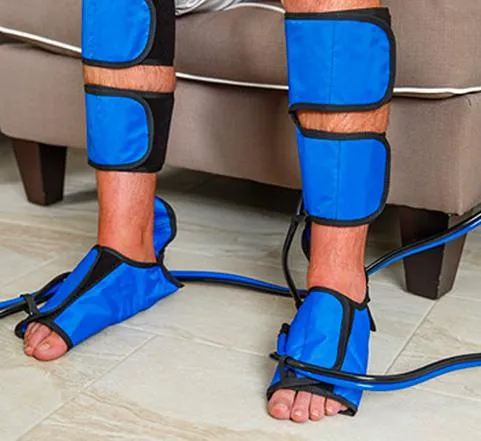
Arterial Compression Therapy for PAD: The Clinical Case for a Non-Surgical Option
For patients living with peripheral arterial disease (PAD), the available treatment menu has long felt narrow. Lifestyle changes and medications form the foundation. Stenting, bypass, and other revascularization procedures sit at the other end. In between, many patients (particularly those with claudication that limits walking, or those who are not candidates for surgery) have struggled to find an effective option they can use at home.
That picture is changing. Arterial intermittent pneumatic compression (IPC) therapy, sometimes called an arterial pump, is gaining renewed clinical attention as a non-surgical option for PAD, and a recent Medicare policy change has made it more accessible than it has been in over a decade.
If you or someone you care for has been told there are "no good options left" between medication and surgery, this guide is for you. It is also written for referring clinicians evaluating where arterial compression therapy fits in a modern PAD care pathway.
What Is Arterial Compression Therapy?
Arterial compression therapy is a non-surgical treatment for peripheral arterial disease that uses a pneumatic pump and limb sleeves to deliver rapid, high-pressure inflation and deflation cycles to the foot, calf, or both. Each compression cycle mechanically increases arterial inflow to the leg, mimicking some of the hemodynamic effects of walking exercise.
The device most commonly used is classified under HCPCS code E0675, a "pneumatic compression device, high pressure, rapid inflation/deflation cycle, for arterial insufficiency." It is distinct from the pumps used to treat lymphedema or chronic venous insufficiency, which operate at lower pressures and slower cycle times.
Treatment is typically delivered at home, in 1 to 2 hour sessions per day, while the patient is seated or resting. For our local product details, see our arterial pumps page.
Why This Topic Matters Right Now
PAD is far more common than most patients realize. The Society for Vascular Surgery reports that PAD affects more than 10 million people in the United States, and the clinical consequences are significant: reduced mobility, impaired wound healing, increased risk of major amputation, and higher cardiovascular mortality.
For many of these patients, revascularization is either not appropriate, not durable, or not possible. That leaves a gap in care.
Two recent developments have reopened the conversation around arterial compression as a meaningful part of that gap:
Medicare retired the restrictive Local Coverage Determination (LCD) that had previously denied reimbursement for arterial pumps. Effective November 14, 2024, LCD L33829 was retired, and coverage now follows National Coverage Determination 280.6. Arterial compression devices billed under E0675 are once again being reimbursed by Medicare when clinical criteria are met.
The 2024 ACC/AHA Multisociety Guideline on the management of lower extremity PAD states that arterial intermittent pneumatic compression may be considered for patients with chronic limb-threatening ischemia who are not candidates for revascularization.
Together, these mark a meaningful shift from "not covered, not recommended" to "covered when indicated, may be considered." For patients and providers alike, that warrants a fresh look.
How Arterial Compression Therapy Works
To understand why this therapy is being revisited, it helps to understand the mechanism.
The Hemodynamic Effect
When the device's sleeves rapidly inflate around the calf and foot, they:
Empty venous blood out of the limb
Drop venous pressure
Widen the arteriovenous pressure gradient, pulling more arterial blood into the leg on the next deflation cycle
The result is a transient surge in arterial inflow. Published studies have documented increases in popliteal artery flow of well over 100% during therapy.
The Endothelial and Vascular Remodeling Effect
That is only the short-term piece. With consistent daily use over weeks and months, the repeated pulsatile flow appears to:
Increase shear stress on the endothelium, which improves vascular function
Promote development of collateral circulation around blocked arteries
Reduce ischemic pain at rest and during walking
In essence, the therapy aims to give the leg what its diseased arteries can no longer provide on their own: a regular, robust pulse of oxygenated blood.
[IMAGE 2]: Anatomical illustration showing pneumatic sleeves on the foot and calf with arrows indicating the inflation-deflation cycle and the resulting surge in arterial inflow through narrowed leg arteries. Alt text: How arterial intermittent pneumatic compression increases blood flow in PAD.
The Clinical Evidence Behind Arterial IPC
Arterial compression for PAD is not a new idea. The concept dates back nearly a century. What has changed is the quality of the devices and the body of clinical evidence.
Improvement in Walking Distance (Claudication)
A 2018 systematic review and meta-analysis published in the Journal of Vascular Surgery (Oresanya et al.) pooled eight randomized controlled trials and found that high-pressure intermittent limb compression significantly increased absolute claudication distance, the distance a patient can walk before being forced to stop by leg pain, by a mean of approximately 125 meters compared to no compression therapy.
For a patient who currently has to stop after walking half a block, this can translate into restored independence.
Limb Salvage in Critical Limb Ischemia
A landmark Mayo Clinic study by Kavros and colleagues, published in the Journal of Vascular Surgery in 2008, evaluated IPC as adjunct therapy in patients with chronic critical limb ischemia and non-healing wounds whose revascularization options had been exhausted. The IPC group experienced significantly improved wound healing and limb salvage at 18-month follow-up compared to controls.
Other case series have reported limb salvage rates in the 80 to 94% range in patients who would otherwise have faced major amputation.
Quality of Life and Symptom Relief
Beyond hard endpoints like walking distance and amputation, multiple studies have documented improvements in rest pain, sleep, and overall quality of life. These outcomes matter enormously to patients but are sometimes underweighted in clinical decision-making.
How Strong Is the Evidence?
It is fair and important to be honest about the limitations. Most studies are small, and major cardiovascular societies have characterized the evidence as moderate rather than definitive. The 2024 ACC/AHA guideline reflects this. It lists arterial IPC as something that may be considered in specific scenarios, not as a first-line standard of care.
The clinical case, then, is not that arterial compression replaces surgery, optimal medical therapy, or supervised exercise. The case is that for a defined subset of PAD patients, particularly those for whom other options are exhausted, contraindicated, or impractical, it is an evidence-supported, low-risk option that can meaningfully improve outcomes.
The 2024 Medicare Coverage Change Explained
For more than a decade, Medicare patients in the United States could not obtain coverage for an arterial pump under E0675. The previous LCD (L33829) explicitly stated that arterial compression devices for PAD were "not reasonable and necessary," citing insufficient evidence at the time.
That changed on November 14, 2024, when CMS retired LCD L33829. Coverage now defaults to NCD 280.6, the broader national policy governing pneumatic compression devices.
What this means in practice:
The blanket denial of E0675 claims for PAD is gone.
Arterial compression devices are once again being reimbursed by Medicare under E0675 when proper clinical criteria, documentation, and a written order are in place.
A face-to-face encounter with the prescribing clinician and a Written Order Prior to Delivery (WOPD) remain required under Final Rule 1713.
Coverage determinations can still vary by Medicare Administrative Contractor (MAC), so documentation and medical necessity remain critical.
For patients who were previously told their pump would not be covered, this is a meaningful reason to ask again.
Who Is a Good Candidate for Arterial Compression Therapy?
Not every patient with PAD needs or benefits from an arterial pump. Based on clinical evidence and guideline language, the strongest candidates generally fall into a few categories.
1. Patients With Disabling Intermittent Claudication
Patients whose walking distance is significantly limited by leg pain, particularly when:
Supervised exercise therapy is unavailable, has been tried unsuccessfully, or is not feasible
The patient is not a candidate for or does not desire revascularization
Medication and lifestyle changes alone have not been sufficient
2. Patients With Chronic Limb-Threatening Ischemia (CLTI)
Patients with rest pain, non-healing wounds, or threatened tissue loss who:
Are not surgical candidates due to comorbidities
Have had previous revascularization attempts that have failed or are no longer durable
Need an adjunct to wound care to improve healing
3. Adjunct to Revascularization
Selected post-procedure patients may use arterial compression to support healing and maintain perfusion, particularly when distal disease persists after intervention.
4. Patients With Co-Existing Diabetic Wound Complications
Patients with diabetic foot ulcers complicated by underlying PAD often benefit from a layered approach: vascular optimization, advanced wound care, and protective footwear together. For more on the footwear piece, see our diabetic and orthopedic shoes page.
Expert Insight: What Actually Drives Outcomes in the Real World
In our clinical experience supplying arterial compression devices, the gap between a therapy that "works in studies" and one that "works for this patient" comes down to a handful of practical factors that are often overlooked.
Daily Dose Matters More Than People Realize
The evidence supporting arterial IPC is built on consistent, daily use, typically one to two hours per day, often split into two sessions. Patients who use the device three times a week, or only when symptoms flare, almost never see the outcomes published in the literature.
The single most important conversation to have with a new arterial pump patient is not about the device. It is about the daily rhythm of when, where, and how they will use it.
Proper Fit and Sleeve Selection
Arterial compression sleeves come in different lengths and configurations: foot-only, calf-only, and combined foot-and-calf. The combined configurations tend to produce the largest hemodynamic effect, but they must be properly sized for the patient's limb. A poorly fitting sleeve underdelivers therapy.
Integration With the Rest of the PAD Care Plan
Arterial compression is not a substitute for:
Smoking cessation
Antiplatelet therapy and statin use when indicated
Glycemic control
Supervised or structured walking exercise
Wound care for patients with tissue loss
It is an addition to these foundations, not a replacement. The patients who do best are those whose vascular specialist, primary care physician, wound care team, and DME provider are coordinated around the same care plan.
Setting Realistic Expectations
Patients should understand that improvements in claudication distance and rest pain usually develop over weeks to months, not days. Setting that expectation upfront prevents premature abandonment of a therapy that needs time to work.
Common Mistakes and Misconceptions
Confusing an arterial pump with a lymphedema pump. They look similar but are clinically very different. Lymphedema pumps (E0650, E0651, E0652) deliver lower pressures over longer cycles. Arterial pumps (E0675) deliver rapid, high-pressure cycles designed to drive arterial inflow. They are not interchangeable, and prescriptions must be specific. For more on lymphedema-specific therapy, see our overview of compression therapy services and resources on lymphedema management.
Assuming Medicare still denies arterial pumps. Many referring clinicians have not yet caught up with the November 2024 LCD retirement. Patients are sometimes told "Medicare will not cover that" based on outdated information.
Skipping a formal vascular workup. A proper diagnosis with ankle-brachial index (ABI), toe pressures, and imaging when indicated is essential before any PAD therapy. Arterial compression is therapy, not diagnosis.
Using the device only when symptoms flare. As discussed above, episodic use generally does not reproduce the outcomes seen in clinical studies.
Ignoring contraindications. Arterial compression is generally contraindicated in active deep vein thrombosis, acute limb ischemia, severe congestive heart failure, and infected wounds where compression could worsen the situation. A clinical evaluation should rule these out.
Step-by-Step: What to Expect From Evaluation to Therapy
For patients exploring this option, the typical pathway looks like this:
Discussion with your primary care physician or vascular specialist about whether arterial compression therapy is appropriate for your situation.
Formal vascular evaluation, including ABI, toe-brachial index, and any imaging your clinician feels is appropriate.
Written order and face-to-face encounter documenting medical necessity. This is a Medicare requirement for E0675.
DME provider intake: your provider gathers documentation, verifies insurance, and coordinates delivery.
Fitting and education: proper sleeve sizing, daily use schedule, and a clear plan for follow-up.
Consistent daily use over weeks and months, with periodic reassessment of symptoms, walking distance, wound status, and pain.
Care coordination with your wound care team, podiatrist, and vascular specialist as appropriate.
When to Seek Professional Help
Patients with PAD should always be under the care of a qualified clinician. Seek prompt medical evaluation if you experience:
New or worsening leg pain at rest, especially at night
Wounds on the feet or legs that are not healing within a few weeks
Sudden coldness, numbness, or color changes in a limb
Black or darkened tissue on the toes or feet
Increased pain with elevation that improves when the leg hangs down
These can be signs of advancing disease that need timely vascular evaluation before considering any home therapy.
For quick follow-up questions, Lumi, our 24/7 chatbot, is available at the bottom right of every page on mcbdme.com for general information on equipment, fitting, and coverage between appointments.
Frequently Asked Questions
Is arterial compression therapy the same as a lymphedema pump?
No. Lymphedema pumps treat fluid accumulation and operate at lower pressures with slower cycles. Arterial pumps (HCPCS code E0675) deliver rapid, high-pressure cycles specifically designed to enhance arterial blood flow in patients with PAD. The devices, the prescriptions, and the clinical use are different.
Does Medicare cover arterial compression therapy in 2026?
Following the retirement of LCD L33829 on November 14, 2024, Medicare coverage of arterial compression devices under HCPCS code E0675 now defaults to National Coverage Determination 280.6. Medicare is reimbursing arterial pumps when medical necessity, a face-to-face encounter, and a Written Order Prior to Delivery are properly documented. Coverage determinations can still vary by region and individual case.
How long does it take to see results?
Most patients begin to notice meaningful changes in walking distance, rest pain, or wound healing over weeks to a few months of consistent daily use, not days. Long-term studies have followed patients for 12 to 18 months or more.
Is the therapy painful?
No. Most patients find arterial compression sessions comfortable. The cycles feel like rhythmic squeezing of the calf and foot. Mild discomfort during initial use is uncommon and should be discussed with the prescribing clinician.
Can I use it if I have already had a stent or bypass?
Often yes. Many patients use arterial compression as an adjunct after revascularization, particularly when distal disease persists or when the revascularization is not fully durable. Your vascular specialist should weigh in on timing.
Will it cure my PAD?
No therapy cures PAD. Arterial compression aims to improve symptoms, increase walking distance, support wound healing, and in selected patients with critical ischemia, reduce the risk of major amputation. It works best alongside medical therapy, exercise, and lifestyle changes.
How is this different from compression stockings?
Compression stockings provide static, low-level external pressure and are not designed to treat PAD. They are not interchangeable with arterial compression therapy. In some PAD patients, traditional graduated compression stockings can actually be inappropriate without clinician guidance.
Where do I start if I think I am a candidate?
Talk to your vascular specialist, primary care physician, or wound care provider. If you would like help understanding the equipment and reimbursement side, our team can coordinate directly with you and your clinicians.
Key Takeaways
Arterial compression therapy is a non-surgical, at-home option for selected patients with peripheral arterial disease, particularly those with disabling claudication or chronic limb-threatening ischemia who have limited surgical options.
The therapy works by rapidly inflating and deflating sleeves on the foot and calf, increasing arterial inflow, encouraging collateral circulation, and improving endothelial function over time.
Clinical evidence supports meaningful improvements in walking distance, wound healing, and limb salvage in appropriately selected patients, though it is positioned as a "may be considered" option in the 2024 ACC/AHA guideline rather than first-line therapy.
Medicare retired the prior LCD denying arterial pump coverage effective November 14, 2024. Devices under HCPCS code E0675 are now reimbursable when clinical and documentation criteria are met.
Outcomes depend on consistent daily use, proper sleeve fit, and integration with the patient's broader vascular care plan.
Arterial pumps are not the same as lymphedema pumps. Prescriptions and clinical use are distinct.
Next Steps
If you or a family member has been living with claudication, rest pain, or a non-healing leg wound, and you have been told that surgery is not the right option, arterial compression therapy may be worth a conversation with your clinician.
Patients: Learn more about our arterial compression solutions or contact our team directly to ask about coverage and next steps. Lumi is also available 24/7 on mcbdme.com for quick questions.
Referring clinicians: We work directly with vascular specialists, wound care teams, primary care providers, and podiatrists to coordinate evaluation, documentation, and delivery of arterial compression devices for appropriate patients. Visit our providers page or reach out to discuss a specific case.
Related Resources:
MCB DME is a durable medical equipment provider based in Hawthorne, New Jersey, specializing in arterial compression therapy, lymphedema management, compression therapy, bracing, diabetic and orthopedic footwear, and prosthetics. MCB DME is a Medicare-enrolled DMEPOS supplier and bills Medicare, Medicaid, and most commercial insurance plans directly for covered items.
Disclaimer: This article is for educational purposes only and is not a substitute for medical advice. Treatment decisions for peripheral artery disease should be individualized with a vascular specialist, primary care physician, or qualified wound care provider. Coverage, documentation requirements, and HCPCS coding are subject to change; always verify current payer policies for guidance specific to your situation.