
How Compression Therapy Supports Mobility in Arthritis Patients
May is National Arthritis Awareness Month, and it lands in the same month as Older Americans Month (2026 theme: Champion Your Health) and National Mobility Awareness Month. For the roughly 1 in 5 U.S. adults living with some form of arthritis, those three observances point at the same question: how do you keep moving when your joints hurt?
Part of the answer, often underappreciated, is compression. Worn correctly, compression sleeves and structured braces reduce pain, stabilize joints, and let patients stay active without overloading damaged tissue. Paired with proper footwear, the right combination of bracing and shoes can be the difference between giving up activities and continuing them for years.
This guide is written for three audiences: patients managing osteoarthritis (OA), rheumatoid arthritis (RA), or related joint disease who want practical guidance on what to wear and why; certified hand therapists, physical therapists, and occupational therapists looking for a patient-friendly resource to share; and referring physicians building bracing into a conservative care plan. We will cover how compression supports arthritic joints, the most-prescribed bracing options for the knee, ankle, and wrist, and how to get the foot foundation right with diabetic or orthopedic footwear.
How Compression and Bracing Help Arthritic Joints
Arthritic joints behave differently than healthy ones. Cartilage thins, joint capsules become inflamed, ligaments lose mechanical advantage, and small everyday loads start producing pain that healthy joints would not register. Compression and bracing intervene at three levels.
Proprioceptive feedback. A snug sleeve or brace gives the joint constant sensory input. The brain uses that input to fine-tune muscle activation, which improves stability and reduces the small, painful "give" that arthritic knees, ankles, and wrists are prone to. This is why even a light elastic sleeve can take the edge off knee OA symptoms during a walk.
Edema control and warmth. Compression reduces low-grade swelling around an inflamed joint, and the slight warmth retained under the sleeve eases stiffness. Patients often describe the effect as "looser" first thing in the morning when wearing a sleeve overnight or first thing on.
Mechanical load redistribution. Structured braces (hinged, articulated, or unloader designs) actually change how force passes through the joint. An unloader knee brace, for example, shifts weight off the most damaged compartment and onto healthier tissue. A wrist splint immobilizes painful motions while leaving useful ones available. This is where bracing crosses from comfort aid to therapeutic device.
The Arthritis Foundation lists braces, splints, and orthotic devices among the recommended non-drug treatments for osteoarthritis, and the 2019 American College of Rheumatology / Arthritis Foundation Guideline for OA of the hand, hip, and knee specifically supports the use of tibiofemoral knee braces in patients with mechanical instability or significant pain.
For broader product context, see our bracing solutions page and our compression therapy services.
Why Mobility Matters More for Arthritis Patients
The traditional response to arthritis pain (rest, avoid activity, "save the joint") is the opposite of what current evidence supports. Inactivity accelerates muscle loss around the joint, which removes the dynamic support cartilage and ligaments depend on, which makes the joint hurt more, which leads to more inactivity. It is a closed loop and it ends in disability.
The CDC and the Arthritis Foundation both recommend regular physical activity as a foundational treatment for arthritis. Properly fitted compression and bracing make that activity safer and more comfortable, which is why the conversation about exercise in arthritis almost always loops back to what the patient is wearing.
Knee Bracing for Arthritis
The knee is the single most common arthritic joint and the most common reason patients seek bracing. There are three categories worth understanding.
1. Compression sleeves
Soft, elastic, pull-on sleeves provide light compression, warmth, and proprioceptive feedback. They are the right first step for mild to moderate knee OA, for patients new to bracing, and for active people who want support during walking or gym sessions without committing to a structured device.
2. Hinged knee braces
A neoprene or fabric sleeve with metal or polymer hinges along each side adds medial-lateral stability without restricting flexion or extension. These are useful for patients whose knee feels unstable on stairs or uneven ground, those with combined OA and ligament laxity, and post-surgical recovery. They sit between a basic sleeve and a true unloader.
3. Unloader (offloading) braces
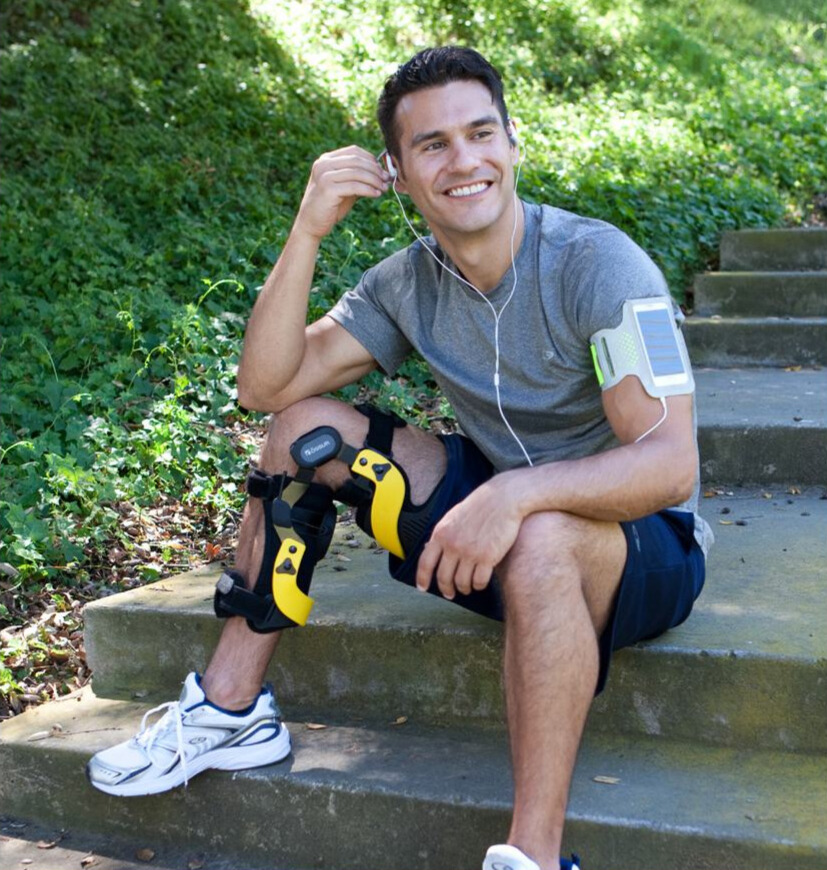
The therapeutic heavyweight for moderate to severe single-compartment knee OA. An unloader brace uses a three-point pressure system to apply a corrective valgus or varus force, shifting weight away from the damaged compartment. The clinical mechanism is well established: by reducing the load on the worn cartilage, the brace reduces pain and improves function during activity.
Unloader braces are often prescribed when patients want to delay knee replacement surgery, when arthroscopic options have been exhausted, or when comorbidities make surgery a poor option. They are also useful as a tool to identify whether further surgical intervention (osteotomy, partial replacement) is likely to help. MCB DME's bracing team works with Breg, DonJoy, Össur, and Ottobock for unloader options.
Ankle Bracing for Arthritis
Ankle arthritis is less common than knee or hip OA but can be just as disabling, often because the cause is post-traumatic (an old fracture or chronic instability) rather than primary degenerative disease. Three brace categories cover most patients.
1. Lace-up and sleeve-style ankle braces
The arthritis equivalent of a knee compression sleeve. Useful for mild OA, post-sprain stiffness, and patients who simply need a sense of stability during walking. Easy to apply, fits inside most shoes, and very forgiving.
2. Hinged ankle braces
Articulated braces that allow plantar and dorsiflexion while restricting inversion and eversion. The right call for patients with chronic ankle instability layered on top of arthritis, and for those returning to sports or higher activity.
3. Ankle-foot orthoses (AFOs) and Arizona-style braces
For severe ankle and subtalar arthritis, custom-molded AFOs (including the Arizona brace, a leather gauntlet-style design) can be transformative. They immobilize the painful joints, transfer load through the brace shell, and often delay or replace the need for ankle fusion surgery. Custom AFOs are billable as durable medical equipment with proper documentation.
Wrist and Hand Bracing for Arthritis
Hand and wrist arthritis is one of the most quality-of-life-disrupting forms of the disease. Opening jars, typing, gripping a steering wheel, even buttoning a shirt becomes painful when the basal thumb joint (CMC) or wrist is affected.
1. Compression gloves and wrist sleeves
Light cotton or elastic compression for arthritic hands. They improve circulation, reduce morning stiffness, and provide gentle support without restricting movement. Many patients sleep in compression gloves to wake up with less stiffness.
2. Wrist cock-up splints
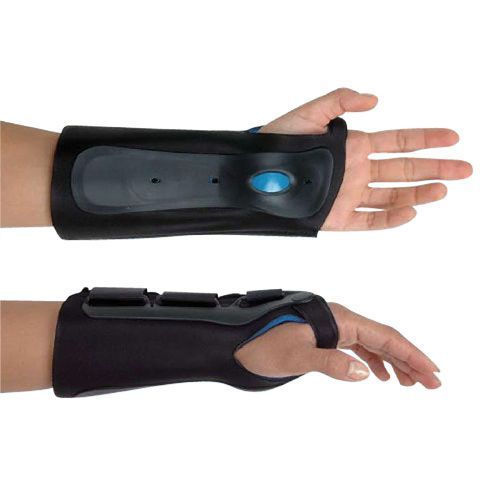
A rigid or semi-rigid splint that holds the wrist in slight extension. Indicated for wrist OA, rheumatoid wrist involvement, and overlapping conditions like carpal tunnel syndrome. Commonly worn at night, during specific aggravating tasks, or during flares. Off-the-shelf options work for most patients; custom thermoplastic splints fabricated by a certified hand therapist are the gold standard for complex cases.
3. Thumb spica braces (CMC arthritis)
The single most useful brace for one of the most common hand arthritis presentations: basal thumb (carpometacarpal) OA. A thumb spica immobilizes the painful CMC joint while leaving the wrist and other fingers free, which means patients can keep working, cooking, and gripping. Both off-the-shelf neoprene options and custom hand-therapy-fabricated splints are available.
For wrist and hand arthritis, the involvement of a certified hand therapist (CHT) is often what determines outcomes. Splinting is only part of the answer; joint protection education, adaptive equipment, and targeted exercise round out the plan.
The Foot Foundation: Why Shoes Matter As Much As Braces
Every brace in this article ends in a foot. If the foot is unsupported, slipping inside the shoe, or fighting against improper alignment, the brace upstream cannot do its job. For patients with arthritis (especially those with co-existing diabetes, a common combination), proper shoe fitting is not optional.
There are two coverage tracks to understand.
Diabetic (Therapeutic) Shoes
Medicare Part B covers therapeutic shoes and inserts for patients with diabetes who meet specific criteria, under what is sometimes called the "Therapeutic Shoe Bill" of 1993. Coverage details are summarized on Medicare.gov's therapeutic shoes and inserts page:
One pair of extra-depth shoes plus three pairs of inserts per calendar year, or
One pair of custom-molded shoes plus two additional pairs of inserts per calendar year.
Eligibility requires a confirmed diabetes diagnosis, documentation of at least one qualifying foot condition (such as peripheral neuropathy with callus formation, foot deformity, or a history of ulcer or amputation), certification by the physician managing the diabetes, and a prescription from a podiatrist or other qualified provider. The shoes must be furnished by a qualified supplier such as MCB DME. Medicare pays 80% of the approved amount; the patient (or secondary insurance) covers the remaining 20% after the Part B deductible.
For patients with diabetes plus arthritis (a very common combination), therapeutic shoes are usually the right starting point because they are covered, they accommodate orthotic inserts, and they have the room and depth needed for arthritic foot changes.
Orthopedic Shoes
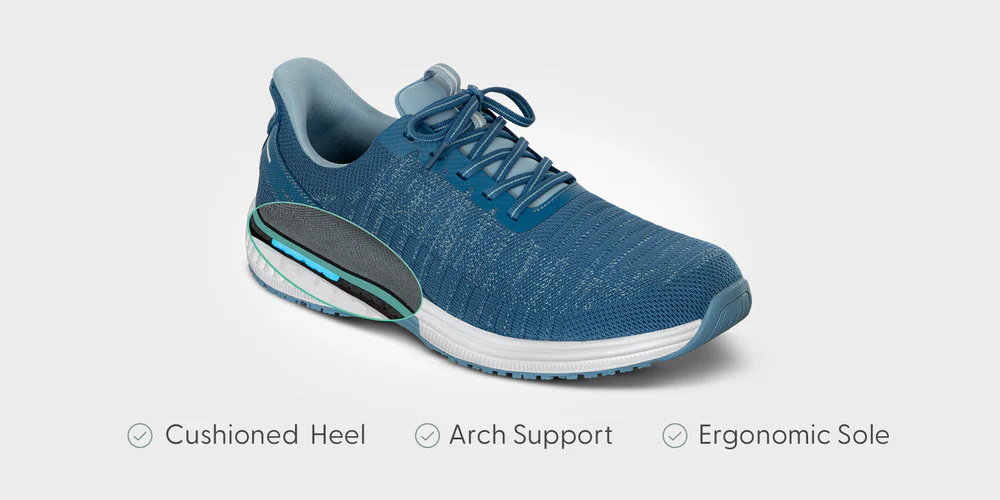
For patients without diabetes but with arthritis-related foot issues (hallux rigidus, midfoot OA, ankle OA, severe bunions, post-surgical changes), orthopedic shoes are the right category. These are typically covered by Medicaid and some commercial plans rather than Medicare, with coverage details depending on the policy. Features that matter for arthritis include:
Extra depth to accommodate custom inserts and swollen joints.
Wide toe boxes that do not compress arthritic forefoot joints.
Stiff rocker soles that reduce painful motion at the midfoot and great toe (essential for hallux rigidus).
Removable insoles so a custom orthotic can replace the factory liner.
Easy-entry closures (Velcro, BOA, stretch) for patients with hand arthritis who struggle with traditional laces.
MCB DME partners with Orthofeet, Dr. Comfort, and Anodyne for diabetic and orthopedic footwear. See our diabetic and orthopedic shoes page for product information and the on-site fitting process.
Why Fitting Cannot Be Done Online
Self-measuring a shoe size, ordering online, and hoping for the best fails most arthritis patients. Arthritic feet change shape over the day, often have asymmetry between feet, and benefit from a fitter watching how the patient stands, walks, and transfers weight. MCB DME provides on-site fitting at our Hawthorne, NJ location and can dispatch a specialist for home fittings when appropriate.
Building a Mobility Plan: Brace + Shoe + Activity
The most effective approach for an arthritis patient combines all three:
The right brace for the most symptomatic joint, prescribed by the treating physician or therapist and fitted by a qualified DME provider.
The right shoes, refitted annually because feet change and shoes wear out.
A consistent activity program, ideally including walking, aquatic exercise, and light resistance training, paired with the compression and bracing above. Our companion piece on mobility and lymphedema covers movement principles that apply equally well to arthritic joints.
Common Mistakes and Misconceptions
"Bracing will make my joint weaker." Generally false for arthritis. Bracing reduces pain and improves function during activity, which means more activity, not less, and stronger surrounding muscles over time. The "weakening" concern applies more to full immobilization, not to functional bracing.
"If a sleeve helps, a tighter sleeve will help more." Compression that is too tight reduces circulation and causes numbness. Fit, not maximum tightness, drives benefit.
"I will just buy a brace at the pharmacy." Off-the-shelf braces from pharmacies are fine for very mild needs, but moderate to severe arthritis usually deserves a properly sized and prescribed device with the right hinge or unloader configuration.
"My shoes are fine. I have had them for years." Therapeutic shoes are designed for replacement on a defined schedule (annually for Medicare-covered diabetic shoes). Worn-out shoes lose their support structure long before they look worn.
"Insurance will not cover any of this." For most patients with the right diagnosis and prescription, Medicare or commercial insurance covers a substantial portion of bracing and therapeutic shoes. MCB DME handles verification and billing.
When to Seek Professional Help
Contact your physician, rheumatologist, hand therapist, or physical therapist promptly if you experience:
A sudden change in joint pain, swelling, or warmth, especially in a single joint (which can indicate infection or crystal arthritis flare).
New numbness, tingling, or weakness in a limb, which may indicate nerve compression rather than arthritis alone.
Skin breakdown, blisters, or non-healing wounds under a brace or inside a shoe, particularly if you have diabetes (this is urgent).
Pain that is not improving with conservative measures including compression, bracing, activity modification, and prescribed medication.
Frequently Asked Questions
Do I need a prescription for an arthritis brace?
For insurance coverage, yes. A prescription from your treating physician (primary care, orthopedist, rheumatologist, or qualified mid-level provider) is required for both bracing and therapeutic shoes. For out-of-pocket purchases, off-the-shelf options are available without a prescription, but a clinical evaluation is still strongly recommended.
How long should I wear my brace each day?
It depends on the brace and the indication. Unloader knee braces and ankle AFOs are typically worn during weight-bearing activity. Wrist cock-up splints are often worn at night and during aggravating tasks. Compression sleeves can usually be worn most of the day. Follow your prescribing provider's specific guidance.
Will Medicare cover my knee brace?
Knee braces are covered under Medicare Part B as durable medical equipment when prescribed for a qualifying diagnosis (such as moderate to severe knee OA with mechanical instability). Patient cost is 20% of the approved amount after the Part B deductible, often covered by Medigap or secondary insurance.
How often can I get new diabetic shoes through Medicare?
Once per calendar year: one pair of extra-depth shoes plus three pairs of inserts, or one pair of custom-molded shoes plus two pairs of inserts. Details on the Medicare.gov coverage page.
What is the difference between diabetic shoes and orthopedic shoes?
Diabetic shoes are specifically designed and coded for patients with diabetes-related foot risk (neuropathy, prior ulcer, deformity) and are covered under a Medicare benefit specifically for people with diabetes. Orthopedic shoes are designed for a broader range of structural foot issues including arthritis, bunions, and post-surgical needs, and are typically covered under Medicaid or commercial plans rather than Medicare. The shoes themselves can look similar; the diagnosis and coding determine the category.
Can I wear a brace and a therapeutic shoe together?
Yes, and it is often the right combination. The brace and shoe are sized and prescribed together to make sure they fit and function as a unit. Mention any bracing during your shoe fitting.
I have arthritis in multiple joints. Where do I start?
Start with the joint that is limiting you the most. Most patients see the biggest functional improvement when the worst joint is addressed first. Your rheumatologist or therapist can help prioritize.
Key Takeaways
Compression and bracing reduce pain, improve stability, and enable activity for patients with arthritis of the knee, ankle, wrist, and hand.
The right device varies by joint and severity, from light compression sleeves to structured unloader and AFO braces.
The foot foundation matters: well-fitted diabetic or orthopedic shoes are part of a complete plan, not an afterthought.
Medicare covers therapeutic shoes for qualifying patients with diabetes once per year, and covers prescribed bracing as durable medical equipment.
A May full of arthritis-, mobility-, and aging-focused awareness moments is the right time to refit, reassess, and rebuild a mobility plan.
Next Steps
If you have arthritis and have not been formally assessed for bracing or shoe fitting in the last year, the right next step is a free consultation. If you are a referring provider, MCB DME can verify benefits, dispense the appropriate brace or shoe, coordinate with the treating therapist, and handle Medicare and commercial billing.
Patients: Visit mcbdme.com/patients or contact us to schedule a free brace or shoe assessment. For quick questions about compression therapy, Lumi, our 24/7 chatbot, is available at the bottom right of every page on mcbdme.com.
Therapists and providers: Visit mcbdme.com/providers for prescription forms, fitter information, and referral support.
Product information: Explore bracing solutions, diabetic and orthopedic shoes, and our full range of compression therapy services.
Related Resources:
MCB DME is a durable medical equipment provider based in Hawthorne, New Jersey, specializing in bracing, compression therapy, lymphedema management, diabetic footwear, arterial pumps, and prosthetics. MCB DME is a Medicare-enrolled DMEPOS supplier and bills Medicare, Medicaid, and most commercial insurance plans directly for covered items.
Disclaimer: This article is for educational purposes only and is not a substitute for medical advice. Bracing and footwear recommendations should be individualized with a physician, rheumatologist, physical therapist, or certified hand therapist. Coverage, documentation requirements, and HCPCS coding are subject to change; always verify current payer policies for guidance specific to your situation.