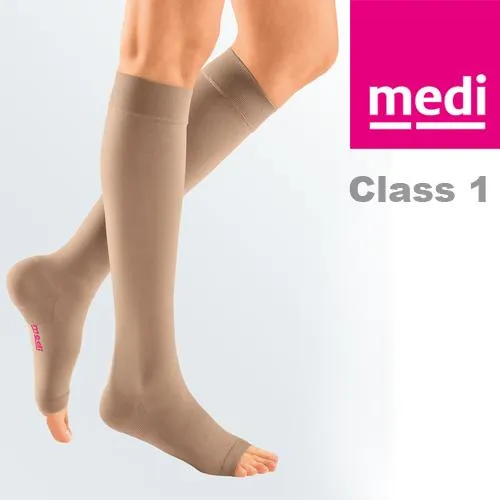
How Long Do Compression Garments Last? Care & Medicare
How long do compression garments last? For most people who wear a daytime stocking, sleeve, or glove every day, about six months. After that, the elastic has stretched and relaxed so many times that the garment no longer squeezes the way your prescription says it should. Nighttime garments usually last longer. How you wash, dry, and put on your garment decides whether you get the full six months or lose compression early.
Late October is a good time to check. The heat comes on, skin dries out, and many patients fitted in the spring are close to a six-month Medicare replacement window. Below is what the brands we carry (Medi, Juzo, Jobst, and Thuasne) say about care, why two sets matter, how to spot a worn-out garment, and how Medicare replacement works. Quick question while you read? Lumi, our 24/7 chat assistant, is at the bottom right of every page on mcbdme.com.
The quick answer
- Daytime garments worn daily last about six months. Medi and Jobst both use six months as their replacement guideline.
- Wash often, ideally after every wear. Skin oils, lotion, and sweat wear out elastic faster than washing does.
- No fabric softener, no bleach, no high heat.
- Own at least two daytime sets so one can be washed while you wear the other.
- Replace early if it slides down, bunches, thins out, or your swelling comes back.
- With Medicare and a lymphedema diagnosis, CMS allows up to 3 daytime garments per affected body part every 6 months and 2 nighttime garments every 2 years.
Why compression garments wear out
Medical compression works because elastic yarns are knit to apply a set pressure, firmest at the ankle or wrist and easing up the limb. Every time you pull the garment on or bend a joint, those yarns stretch. They are built to snap back, but each cycle takes a little out of them. Three things speed that up: body oils and lotion building up in the fabric, heat from dryers, radiators, and sun, and harsh products like fabric softener and bleach.
Your body changes, too. If your limb shrank after therapy or swelled during a flare, a garment that fit in April may not fit now, even if it is in good shape. Our step-by-step measuring guide explains how sizing works, and our fitters can re-measure you in the office.
How to wash compression socks and garments
The tag on your garment always wins, but the major manufacturers agree on most of the basics. Medi's care guidance says to wash stockings every evening on a gentle cycle at 30 or 40 °C (about 86 to 104 °F) with a color detergent that has no brighteners, and never to use fabric softener. The JOBST FAQ recommends washing daily or at least every other day, skipping softener, brighteners, stain remover, and bleach, and never ironing or dry cleaning. Juzo's patient care sheet calls for a warm daily wash with mild soap and the lowest permanent press setting if you machine dry. Thuasne's FAQ says most of its products are machine washable at 30 °C and suggests lukewarm water and a mild, non-detergent soap for hand washing.
| Brand | How often | Avoid | Drying |
|---|---|---|---|
| Medi | Every evening, gentle cycle, 30 to 40 °C | Fabric softener, optical brighteners | Gentle or low tumble, or air dry away from sun and radiators |
| Jobst | Daily, or at least every other day | Softener, brighteners, stain remover, bleach, ironing, dry cleaning | Roll in a towel, then flat dry or low tumble |
| Juzo | Daily, warm | Bleach, chlorine, fabric softener | Lowest permanent press setting, mesh garment bag |
| Thuasne | Per product label (most items 30 °C) | Heat while drying | Press out water gently, dry flat away from heat |
A simple routine for any brand
- Take the garment off in the evening and turn it right side out.
- Hand wash in lukewarm water with a little mild soap, or machine wash on gentle in a mesh bag with similar colors.
- Rinse well. Leftover soap irritates skin.
- Roll it in a towel and press. Do not wring or twist.
- Lay it flat or hang it on a rack, away from the radiator and sunny windows. Use the dryer only on low, and only if your brand allows it.
- If it has a silicone top band, wipe the band now and then. Jobst notes this removes lotion and hair buildup that keeps the band from gripping.
Why rotating two sets matters
With only one daytime garment, you are stuck choosing between skipping the wash or wearing it damp. A dirty garment loses elasticity faster, and a damp one is uncomfortable on skin. With two sets, one is on while the other is washed, dried, and given time to relax back into shape. Each one takes half the wear, so both are more likely to reach six months. A third garment, which Medicare's daytime limit allows for people who qualify, covers a snag, a sweaty day, or laundry that did not get done.
Small tip: put a dot on the inside label of one garment so you can tell them apart and actually rotate instead of grabbing the same one every morning.
Signs your garment has lost compression
Garments rarely fail all at once. They slowly get easier to wear, which feels nice until you realize they have stopped working. Watch for:
- It goes on too easily. If it used to take effort and now slides right on, the elastic has relaxed.
- It slips or bunches. A stocking rolling down or a sleeve sliding toward the wrist can create a tight band in the wrong place.
- Visible wear. Runs, holes, thin or shiny patches, or a stretched-out heel.
- Swelling is back. More puffiness at the end of the day, or pitting and sock lines you had not seen in months. This can also mean your condition changed, so tell your doctor or therapist.
- Wrinkles at the ankle, elbow, or wrist. Wrinkles concentrate pressure and rub skin.
If this happens well before six months, call us. It may be a care issue, a sizing issue, or a sign a different knit or style would hold up better for you.
Putting on and taking off without damage
Most early damage happens while putting the garment on. Jobst recommends donning first thing in the morning, before swelling builds, and warns that long fingernails and jewelry can tear the fabric. A few habits help:
- Wear rubber gloves. Dishwashing or textured donning gloves let you smooth the fabric up the limb instead of yanking the top band. Jobst specifically recommends rubber gloves or a donning aid.
- Try a donning aid. Juzo's donning and doffing aids include slide-on aids for open and closed toe stockings and for arm sleeves, a textile glove with a non-slip coating, and a doffing aid for taking stockings off. These are a big help with arthritis, back pain, or trouble bending.
- Turn stockings inside out to the heel. Slip your foot into the heel pocket, then roll and smooth upward in sections.
- Peel it off gently. Roll it down rather than dragging it.
If mornings are still a fight, tell us. A zipper, a wrap, or a different size can make the difference between a garment you wear and one that sits in a drawer.
Skin care under compression
Lotion helps skin, but lotion trapped in fabric breaks down elastic. The fix is timing. Jobst recommends applying body lotion after you remove your garment, so moisturize at night and put the garment on clean, dry skin in the morning. Check your skin daily for redness that does not fade, blisters, or broken spots, especially at the top band, behind the knee, and at the front of the ankle. Our compression safety guide covers the warning signs that mean you should take a garment off and call your provider. With lymphedema, even a small crack in dry skin can let infection in, so report new redness, warmth, or sudden swelling promptly.
Winter dryness tips
Northern New Jersey and Rockland County winters mean dry indoor heat, and dry skin under compression itches and cracks. The American Academy of Dermatology's dry skin tips fit well with compression care:
- Keep showers to five to ten minutes in warm, not hot, water.
- Moisturize while skin is still a little damp. An evening shower and bedtime cream works well with compression.
- Pick ointments or creams over thin lotions. They hold moisture better.
- Choose products labeled "fragrance-free," not just "unscented."
- Run a humidifier in the bedroom and clean it regularly.
And as tempting as it is with the heat on, do not dry your garments on the radiator.
Medicare replacement under the Lymphedema Treatment Act
Since January 1, 2024, Medicare has covered compression garments for people with lymphedema under the Lymphedema Treatment Act. The CMS lymphedema compression treatment items page lists these limits:
| Item | Quantity | How often |
|---|---|---|
| Daytime garments (including gradient compression wraps) | Up to 3 per affected body part | Every 6 months |
| Nighttime garments | Up to 2 per affected body part | Every 2 years |
| Lost, stolen, or irreparably damaged items | Replacement may be covered | Outside the normal schedule |
| Change in condition, such as limb size | New garments may be covered | Outside the normal schedule |
"Per affected body part" means that if both legs are affected, each leg has its own allowance. The three daytime garments are what make the wear-one, wash-one routine possible. And if garments wear out early from a care problem, Medicare generally will not pay for new ones until the window opens again, so good care protects your coverage as well as your skin. Medicare Advantage, Medicaid, and private plans can have different rules. MCB DME verifies your benefits before anything ships. If you are near six months, we can check your eligibility date, re-measure you, and handle the paperwork with your prescriber. More on our compression garments page.
Common mistakes that shorten a garment's life
- Fabric softener or dryer sheets "to keep them soft."
- Drying on a radiator, heater vent, or in a hot dryer.
- Wearing the same garment several days without washing.
- Pulling it on by the top band.
- Heavy lotion right before putting it on.
- Folding over or cutting a band that feels tight instead of asking about a refit.
- Keeping it past its prime because it "still looks fine."
Frequently asked questions
How long do compression garments last?
Daytime garments worn every day typically last about six months, the general guideline from Medi and Jobst. Nighttime garments usually last longer. Heat, heavy use, and poor washing shorten that.
Can I put compression socks in the washing machine?
Usually yes. Medi, Jobst, and Juzo allow machine washing on gentle, and Thuasne says most of its products can be machine washed at 30 °C. Use a mesh bag, mild detergent, and no softener, and check the label first.
Can compression garments go in the dryer?
Some brands allow low or gentle heat. Medi and Jobst say low is fine, and Juzo suggests the lowest permanent press setting. Air drying away from heat is the safest choice for any brand.
How many compression garments should I own?
At least two daytime sets. Medicare's lymphedema benefit allows up to three daytime garments per affected body part every six months for people who qualify.
How do I know my garment is worn out?
It goes on much more easily, slides or bunches, has runs or thin spots, or your swelling is returning even though you wear it daily.
Will Medicare replace garments that wear out early?
Medicare generally follows its schedule, but CMS allows replacement of items that are lost, stolen, or irreparably damaged, and new garments when your condition changes. MCB DME can review your situation and verify benefits.
Key takeaways
- Plan to replace daytime compression garments about every six months.
- Wash after every wear with mild soap, no softener or bleach, and keep them away from high heat.
- Rotate at least two sets.
- Use gloves or a donning aid, and moisturize at night after taking the garment off.
- Replace early if it slips, thins, or your swelling returns.
- Medicare's lymphedema benefit allows 3 daytime garments per affected body part every 6 months and 2 nighttime garments every 2 years.
Related reading: lymphedema sleeve guide and nighttime compression garments.
Next steps
If your garments are past six months, feel loose, or are hard to get on, we can help. MCB DME fits and supplies Medi, Juzo, Jobst, and Thuasne garments for patients across northern New Jersey and New York, including Rockland County.
- See our lymphedema care options, including pumps and garments.
- Comparing styles and strengths? Read our guide to choosing compression socks.
- Call (973) 553-0777, or visit 293 Lafayette Avenue, Suite 104, Hawthorne, NJ 07506.
- Contact us online to schedule a fitting.
- After hours, ask Lumi, our 24/7 chat assistant at the bottom right of any page on mcbdme.com.
This article is for general education and is not medical advice. Always follow your doctor's or therapist's instructions and the care label on your specific garment. Coverage depends on your diagnosis and plan, and MCB DME verifies benefits before anything ships.