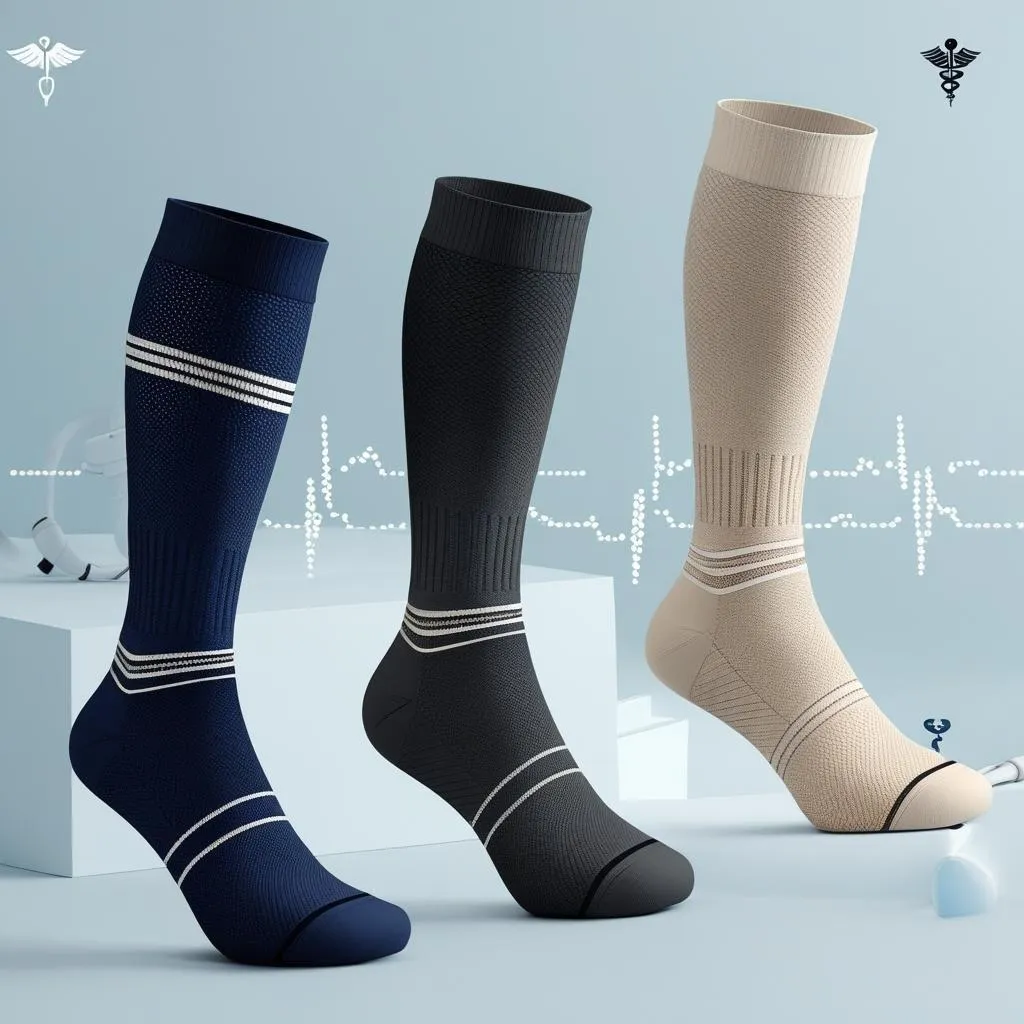
How to Choose Compression Socks: 2026 Buyer's Guide (mmHg, Size, Type)
Choosing the right compression socks comes down to three decisions: compression level (mmHg), length, and knit type.
For mild support, 15–20 mmHg is enough; for medical conditions like venous insufficiency or lymphedema, you'll need 20–30 mmHg or higher with a doctor's recommendation. Knee-high covers most cases.
But here's the thing: compression socks aren't one-size-fits-all, and the wrong pair can be uncomfortable at best and medically ineffective at worst. The right pair, though? It can genuinely change how you feel on your feet every single day.
At MCB DME, we've helped hundreds of patients across New Jersey find the compression garments that actually work for their specific condition, lifestyle, and body. We carry three of the most trusted names in the industry — Medi, Juzo, and Jobst — and in this guide, we're going to walk you through everything you need to know to make a confident, informed decision.
Whether you're managing a chronic condition like lymphedema or venous insufficiency, recovering from surgery, or just trying to survive a 12-hour shift on your feet, this guide is for you.
What Are Compression Socks and How Do They Work?
Compression socks are therapeutic garments designed to apply graduated pressure to your legs — tighter at the ankle and gradually decreasing as they move up the leg. This gentle squeezing action helps your veins push blood back up toward your heart, reducing pooling, swelling, and discomfort.
They're not just for older adults or people with serious conditions. Compression socks are commonly used by people managing varicose veins or chronic venous insufficiency (CVI), patients recovering from surgery or DVT (deep vein thrombosis), individuals dealing with lymphedema or persistent leg swelling, pregnant women experiencing pregnancy-related edema, nurses, teachers, retail workers, and anyone on their feet all day, and frequent flyers dealing with travel-related circulation issues.
They come in knee-high, thigh-high, and full pantyhose styles, with a wide range of compression strengths, fabrics, and designs to match both medical needs and personal preferences.
💡 Important: Always consult with a medical professional before beginning compression therapy — especially if you have peripheral arterial disease (PAD), diabetes, or any open wounds on your legs. The team at MCB DME can connect you with the right clinical support. You can also learn more from the Mayo Clinic's guide to compression stockings.

Understanding Compression Levels
Not all compression socks are created equal, and the mmHg (millimeters of mercury) rating tells you how much pressure the sock applies. Choosing the right level is critical — too little and you won't get the therapeutic benefit, too much and you could cause discomfort or even restrict circulation.
For most people just starting compression therapy, a 15–20 mmHg sock is a comfortable entry point. If you've been prescribed a specific level by your doctor or vascular specialist, always follow that recommendation. And if you're unsure, the fitting team at MCB DME can help you find the right starting point — no guesswork required.
Choosing the Right Brand: Medi vs Juzo vs Jobst
Now for the part you've been waiting for. Let's break down the three brands we carry at MCB DME and who each one is really built for.
🧦 Medi: German Engineering Meets Everyday Style
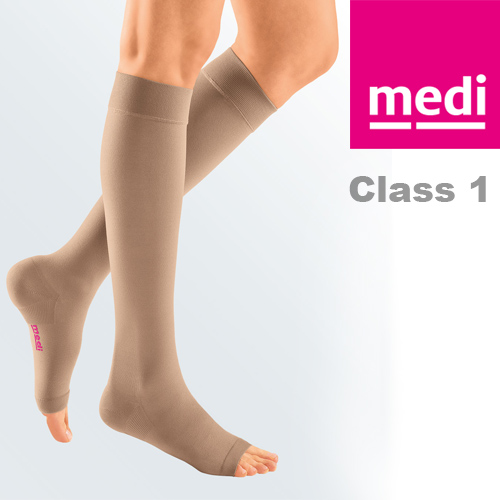
Medi compression socks combine medical-grade support with fashion-forward design — ideal for professionals and active wearers.
If you've ever avoided compression socks because they look like something your grandfather wore, Medi is going to change your mind. This German-engineered brand has figured out how to make medical-grade compression actually look good — and that matters more than people give it credit for, because you're only going to wear socks you actually like.
Medi offers high-quality, breathable fabrics that hold up over months of daily use, skin-friendly materials ideal for patients with sensitive skin or dermatological conditions, an extensive range of colors and patterns from subtle neutrals to bold designs, and moisture-wicking knit that keeps your legs comfortable through long workdays.
Medi's socks are available in compression levels ranging from 15 to 40 mmHg, covering the most commonly prescribed ranges for venous conditions and everyday prevention.
Best for: Professionals, younger patients, and anyone who wants their compression garment to feel like a lifestyle choice rather than a medical burden. If you're wearing these to the office, the gym, or out with friends, Medi is worth a look.
🧦 Juzo: Custom Comfort for Complex Needs
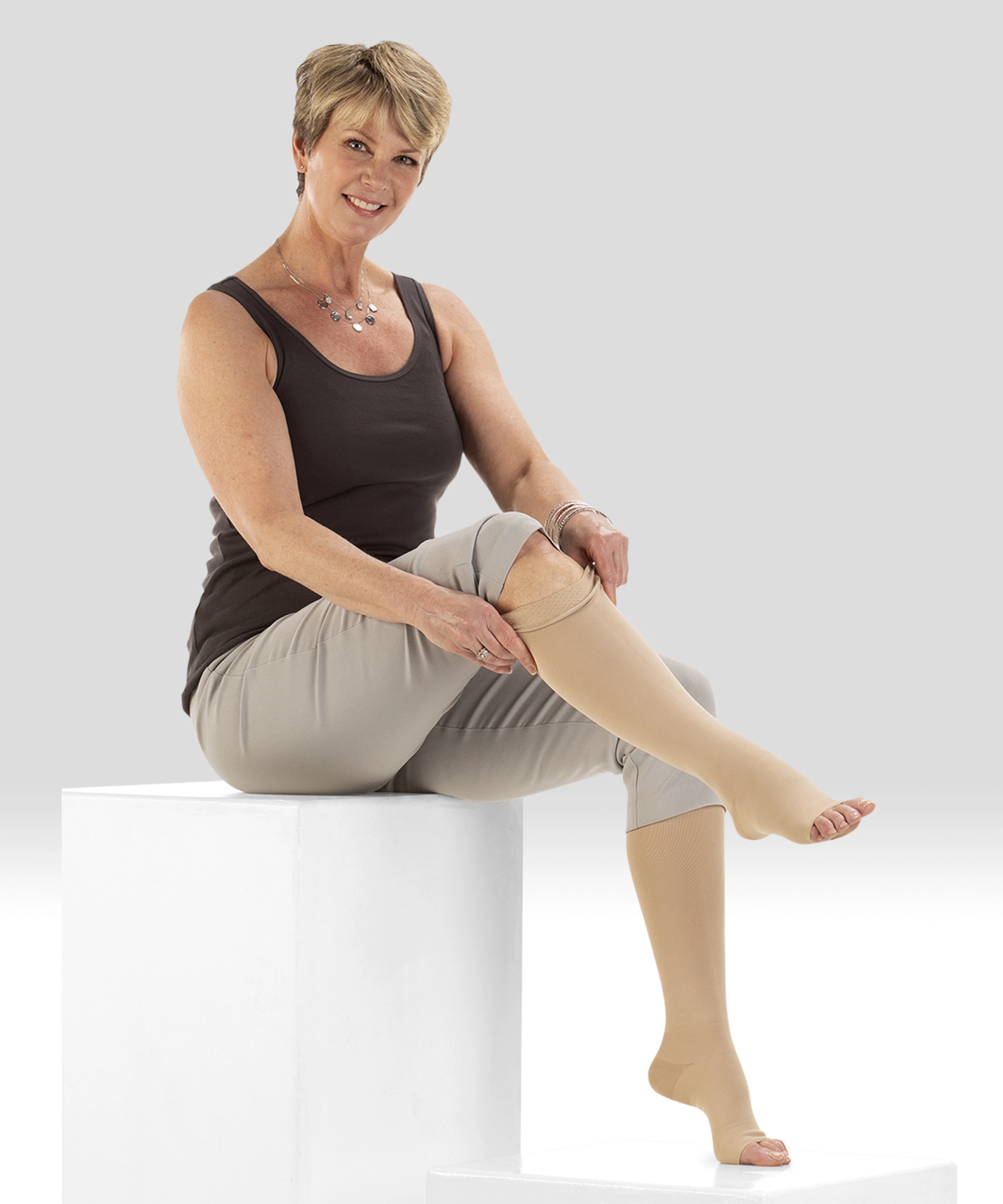
Juzo has built a loyal following — and for good reason. If your primary concern is comfort, fit, or finding something that works for a body that standard sizing just doesn't accommodate, Juzo is often the answer.
What sets Juzo apart is seamless circular and flat-knit construction for a smooth, irritation-free feel, 100% latex-free materials essential for patients with latex allergies, open-toe and closed-toe options to accommodate different foot shapes and preferences, custom sizing availability for patients who can't find a comfortable fit in standard sizes, and machine-washable construction with no special cleaning required.
Juzo's custom sizing option is particularly significant. Many lymphedema patients, post-surgical patients, and people with unusual limb proportions struggle to find off-the-shelf compression that actually fits correctly — and an ill-fitting sock can undermine the entire therapy. Juzo solves that problem.
Best for: Lymphedema patients, anyone with custom sizing needs, patients with latex allergies, and those who prioritize day-to-day comfort above everything else.
For more on lymphedema management and compression therapy, the National Lymphedema Network is an excellent resource.
🧦 Jobst: Clinical Strength You Can Count On
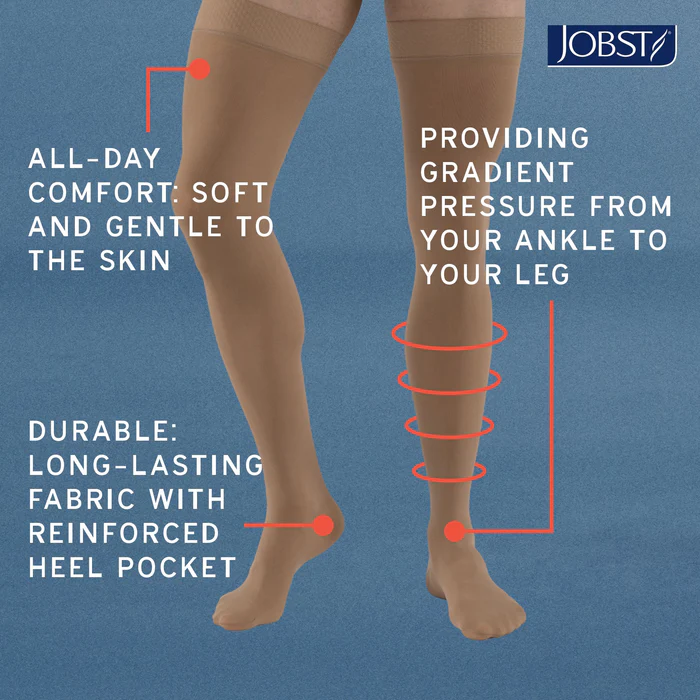
Jobst is a trusted name among vascular specialists for long-term DVT prevention, post-surgical recovery, and advanced venous conditions.
Jobst has been in the compression therapy space for decades, and they've earned the trust of vascular specialists and medical professionals for a reason. When someone needs serious, reliable compression for a serious condition, Jobst consistently delivers.
Key features of Jobst compression garments include high durability built for daily wear over extended periods, precise medical-grade compression across the full mmHg spectrum including higher Rx-strength options, silicone stay-up bands on select styles to keep socks in place without rolling or slipping, and a proven track record with vascular surgeons, lymphedema therapists, and post-operative care teams.
Jobst covers compression levels from 15 all the way up to 50 mmHg, making them one of the few brands equipped to handle the most advanced venous and lymphatic conditions.
Best for: Post-surgical recovery, long-term DVT prevention, advanced lymphedema, and anyone whose doctor or specialist has specifically recommended clinical-grade compression therapy.
For clinical guidance on chronic venous disease, Vascular.org is a trusted resource maintained by the Society for Vascular Surgery.
Comparing the Brands Side-by-Side
Still not sure which brand fits your situation? Here's the at-a-glance comparison:
One thing worth noting: all three brands are legitimately excellent — the differences come down to your specific condition, body, lifestyle, and what your doctor has recommended. This isn't a competition so much as a matching exercise, and the team at MCB DME does this every day.
How to Get the Right Fit (This Part Is Non-Negotiable)
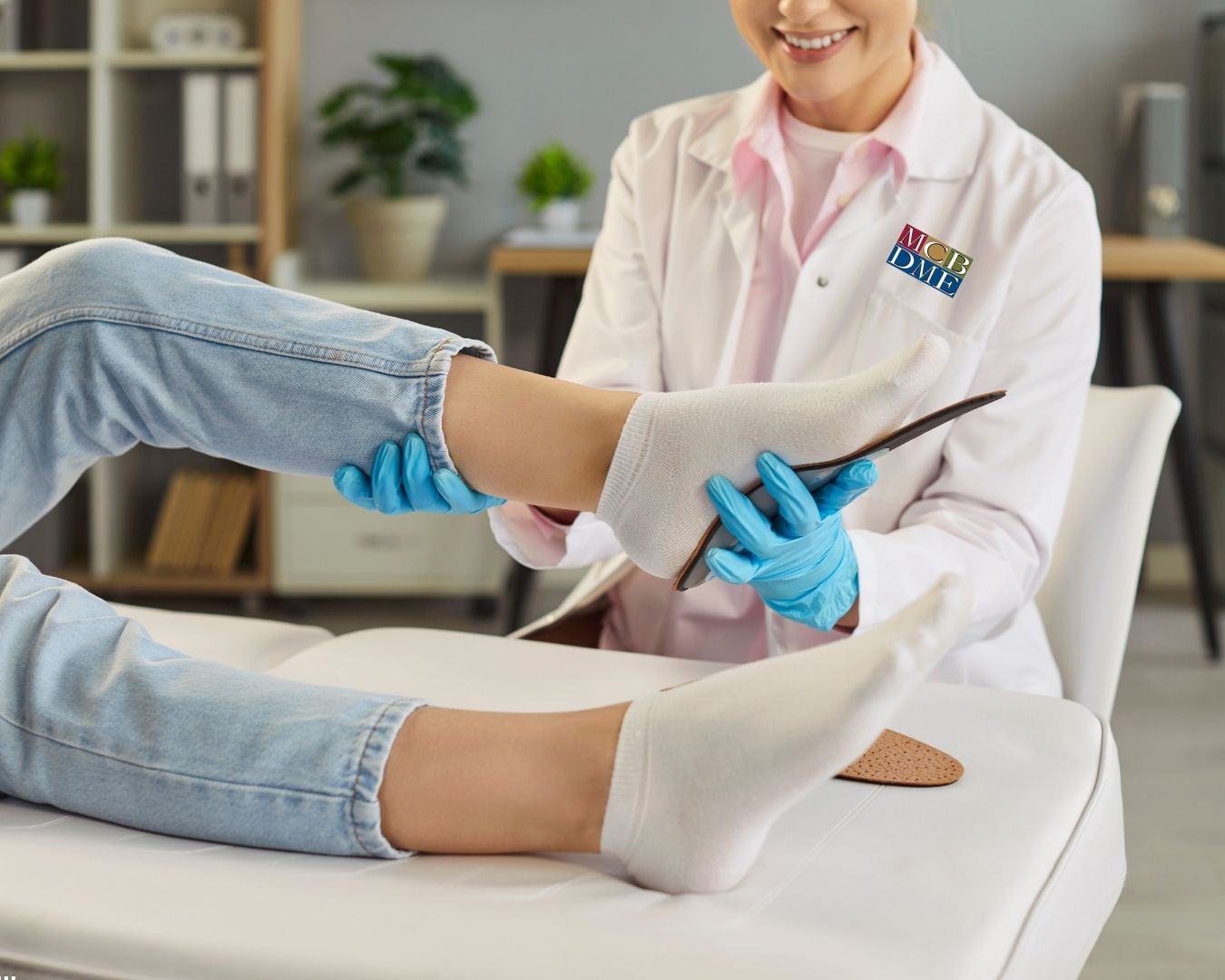
MCB DME offers professional compression garment fittings in-person at our Hawthorne, NJ location.
Here's something most online guides skip over: compression socks only work if they fit correctly. A sock that's too loose won't deliver the therapeutic pressure. A sock that's too tight can actually cause problems. And generic sizing charts — even good ones — have real limitations for patients with irregular limb shapes, significant swelling, or post-surgical changes.
That's why professional fitting matters so much, and it's one of the core services MCB DME provides.
When you come in for a fitting, we take precise measurements of your ankle, calf, and sometimes thigh circumference, as well as leg length. For patients with lymphedema or significant edema, we often recommend measuring at the same time of day — typically morning, before swelling increases — for the most accurate results.
MCB DME offers in-person measurements at our Hawthorne, NJ showroom for custom compression garments, telehealth fittings for patients who can't make it in (we walk you through the measurement process over video), and insurance assistance for Medicare and private insurance coverage — many compression garments are covered when medically necessary.
📞 Ready to get fitted? Call us at (973) 553-0777 or contact us online to schedule your free fitting consultation. We serve patients throughout Bergen County and Northern New Jersey from our location at 293 Lafayette Avenue, Suite 104, Hawthorne, NJ 07506.
Tips for Getting the Most Out of Your Compression Socks
Once you have the right pair, a few habits will help you get maximum benefit.
Put them on first thing in the morning. Swelling is lowest when you wake up, making it easier to get the socks on and ensuring they're in position before you start your day.
Replace them every 3–6 months. Compression socks lose elasticity over time. If they're feeling looser or less supportive, it's time for a new pair — no matter how good they still look.
Wash them regularly but gently. Most compression socks are machine washable, but use a gentle cycle and avoid high heat in the dryer, which can break down the elastic fibers faster.
Don't ignore fit changes. If your legs change significantly due to weight loss, surgery, or changes in your condition, get remeasured. A sock that fit you six months ago may not be giving you the support you need today.
Wear them consistently. Compression therapy works best when it's part of a daily routine, not something you reach for only when your legs are already swollen and uncomfortable.
Frequently Asked Questions
Can I wear compression socks if I don't have a diagnosed condition? Absolutely. Many people wear mild compression (8–15 or 15–20 mmHg) for everyday comfort, travel, or jobs that require prolonged standing. You don't need a prescription for lower compression levels.
Does insurance cover compression socks? It depends on your insurance plan and diagnosis. Medicare and many private insurers do cover compression garments when they're medically necessary and prescribed by a physician. MCB DME's team can help you navigate the insurance process — contact us or call (973) 553-0777 to find out what you may be eligible for.
How do I know if my compression socks are working? Signs that your compression therapy is effective include reduced swelling by end of day, less leg fatigue, and improvement in any visible varicose veins over time. If you're not noticing any difference after a few weeks of consistent use, it may be worth revisiting your compression level or fit with a professional.
Can I sleep in compression socks? Generally, no — most compression therapy is intended for use during waking hours when you're upright and active. There are some exceptions for specific medical conditions, but always follow your doctor's guidance on this.
The Bottom Line
Compression therapy is one of those things that sounds simple on the surface but has a lot of nuance once you get into it. The good news is that you don't have to figure it out alone.
Whether you're drawn to the stylish performance of Medi, the custom comfort of Juzo, or the clinical reliability of Jobst, the right pair of compression socks is out there — and MCB DME has the expertise to help you find it. From your first fitting to ongoing care, we're here to make sure your compression therapy is actually working the way it should.
📞 Call us at (973) 553-0777 or visit our website to schedule your free compression garment fitting. We're located at 293 Lafayette Avenue, Suite 104, Hawthorne, NJ 07506 and serve patients throughout Bergen County and Northern New Jersey.
Related Reading:
External Resources:
Vascular.org: Chronic Venous Disease
Custom HTML/CSS/JAVASCRIPT