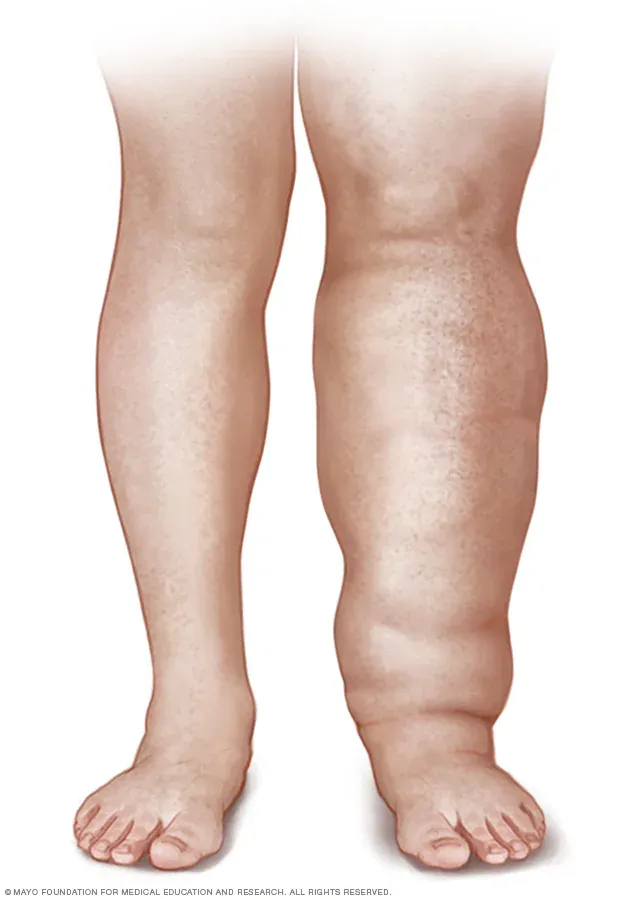
Lymphedema After Breast Cancer: Early Arm Swelling Signs
Lymphedema after breast cancer usually starts small. A ring that needs soap to come off. A blouse sleeve that pulls at the forearm by evening. An arm that feels heavier than the other one, even though it looks the same. October is Breast Cancer Awareness Month, and most of the talk is about screening and treatment. This post is about what comes after: how to spot arm swelling early, why it happens, which old "rules" still hold up, and what treatment looks like.
Have a quick question while you read? Lumi, our 24/7 chat assistant, is at the bottom right of every page on mcbdme.com. MCB DME works with breast cancer survivors across northern New Jersey and New York, including Rockland County.
The quick answer
- Lymphedema is a buildup of lymph fluid that can happen after lymph nodes in the armpit are removed or treated with radiation.
- The first signs are often feelings, not visible swelling: heaviness, tightness, aching, or rings and sleeves that fit tighter on one side.
- Most cases show up within a few years of surgery, but it can start much later.
- Early lymphedema is easier to control. Measure your arm, notice changes, and call your team if a change sticks around.
- Advice about blood pressure cuffs and needle sticks on the treated arm has softened as research came in.
- Treatment usually means complete decongestive therapy (CDT) with a certified lymphedema therapist, then daily compression. Medicare has covered lymphedema compression garments since January 1, 2024.
Why it happens
Your lymphatic system is a network of thin vessels and small nodes that drains fluid out of your tissues. The nodes under your arm handle drainage for the arm, hand, breast, and part of the chest wall and back. When some of those nodes are removed, or scarred by radiation, fluid has fewer ways out. Some people's remaining vessels keep up fine. For others, fluid slowly collects. (Our post on what lymphedema is covers the basics.)
How many nodes come out matters most. A sentinel node biopsy removes a few. An axillary lymph node dissection removes many more. In one large study reported by The ASCO Post, the five-year lymphedema rate was about 8% after sentinel node biopsy alone and about 25% after axillary dissection alone, and higher when lymph node radiation was added. Surgery type was the main driver.
Higher body weight, arm infections, slow healing after surgery, and some chemotherapy drugs also raise risk. Timing is the part people underestimate. Most lymphedema develops within about three years of surgery, but it can begin days or many years after treatment. Feeling fine at your one-year visit doesn't mean you're done watching.
Early signs to watch for
Early lymphedema is hard to see in the mirror. Usually you feel it, or your clothes and jewelry tell you. Memorial Sloan Kettering lists heaviness, aching, a tight feeling in the skin, and rings that are tighter or no longer fit as early signs.
Fit clues
- A ring on the treated side leaves a deeper dent or won't come off at night.
- Your watch or bracelet leaves a mark it didn't used to.
- One shirt sleeve feels snug, especially later in the day.
- Your bra band or strap digs in more on the treated side, or the chest and back near the armpit feel puffy.
Feel clues
- The arm feels full or tired sooner than the other one.
- Tingling, aching, or a stretched feeling in the skin.
- Veins and knuckles on the back of the hand are harder to see.
- Pressing a fingertip into the area leaves a small dent for a few seconds.
Measurement changes
Numbers catch changes before you're sure about them. Ideally your team took baseline arm measurements before surgery. Some cancer centers track arm changes with a tape measure, others with bioimpedance spectroscopy, a painless test that estimates extra fluid in the arm. If you never had a baseline, start now:
- Pick two or three spots on each arm, like around the hand below the knuckles, the wrist, and a set distance above the wrist. Note how far each spot is from a bony landmark so you hit it every time.
- Measure both arms once a month at the same time of day with a soft tape, snug but not squeezing.
- Write it down. Your dominant arm may normally be a bit bigger, so watch for change on the treated side, not perfect symmetry.
Research studies have often used about a 5% increase in arm size as the signal to start treatment. You don't need to do the math. A steady trend up, or a new difference you can feel, is reason enough to ask.
Normal healing or something to call about?
Some swelling right after surgery is normal and usually settles over a few weeks. This is a rough guide, not a diagnosis.
| What you notice | Often normal | Call your team soon | Get seen the same day |
|---|---|---|---|
| Swelling near the incision in the first weeks | Yes, if it's slowly improving | If it's getting worse | With fever or spreading redness |
| Heaviness or tightness in the arm | Brief, after heavy use, gone by morning | Keeps returning or lasts a few days | Not usually urgent on its own |
| Ring, watch, or sleeve tighter on one side | Rarely | Yes, especially if new | If swelling came on over a day or two |
| Red, warm, tender skin | No | Don't wait | Yes, possible infection (cellulitis) |
| Sudden swelling with pain | No | Don't wait | Yes, needs checking for a clot or other cause |
Risk-reduction habits backed by current evidence
Survivors used to get a long list of "never" rules. Some still hold. Others have been revised.
Keep moving, and yes, you can lift
In the Physical Activity and Lymphedema (PAL) trial, published in JAMA in 2010, women who had lymph nodes removed did slowly progressive, supervised weight training for a year. It did not raise their rate of lymphedema compared with women who didn't lift. Start light, build slowly, and back off if the arm feels heavy afterward. A physical therapist who works with survivors can set up a plan.
Protect your skin
Infection is one of the better-established triggers. Moisturize to prevent cracks, wear gloves for gardening and cleaning, use an electric razor under the arm, and clean small cuts right away. Cleveland Clinic lists redness, pain, increased swelling, and fever as reasons to call your provider.
Manage your weight
Higher body weight is one of the more consistent risk factors. Steady activity and gradual weight loss, if your doctor recommends it, can help.
Blood pressure cuffs and needle sticks: evolving guidance
The rule against ever using the treated arm for blood pressure, blood draws, IVs, or shots goes back about a century and was based mostly on case reports. More recent studies haven't shown that these procedures clearly cause lymphedema. A 2025 article in the Clinical Journal of Oncology Nursing reviews that research and notes the workarounds (foot sticks, leg blood pressures, repeated sticks in the other arm) have downsides too.
Guidance hasn't changed everywhere, though. A reasonable middle ground, close to what Memorial Sloan Kettering tells patients:
- Use the other arm when it's available. Many centers still prefer this, especially after an axillary dissection.
- If it isn't available, using the treated arm is generally considered acceptable.
- If you already have lymphedema in that arm, most clinicians avoid it when they can.
- Ask your own surgeon or oncologist, and consider a limb alert bracelet so staff know to ask.
Air travel
Evidence that flying causes lymphedema in people who don't have it is weak. If you already have lymphedema, a fitted sleeve on long flights is common practice. Skip random off-the-shelf sleeves, because a poor fit can trap fluid in the hand.
When to get evaluated
Don't wait for the arm to look bigger. Call your oncology or surgical team if heaviness, tightness, or a tighter ring or sleeve lasts more than a few days or keeps coming back, if your measurements trend up, or if you see swelling in the hand, breast, chest wall, or upper back on that side. Get seen the same day for red, hot, painful skin, fever, or sudden swelling, since infection or a clot has to be ruled out first.
The visit usually includes an exam, measurements, and often a referral to a certified lymphedema therapist (CLT), typically a physical or occupational therapist with extra lymphedema training. If you're in Bergen, Passaic, or Rockland County and need help finding one, ask us.
Treatment if it is lymphedema
There's no cure, but early cases are often very manageable. Treatment has two phases.
Complete decongestive therapy (CDT)
In the intensive phase you see a CLT several times a week for a few weeks. CDT combines:
- Manual lymphatic drainage (MLD): a very light skin technique that moves fluid toward working nodes. It isn't deep massage and should be done by a trained therapist. See our post on manual lymphatic drainage therapy.
- Multilayer bandaging to hold the reduction.
- Exercise while wearing compression.
- Skin care to lower infection risk.
Once the arm is as reduced as it will get, you move to maintenance, and that's where garments come in.
Compression sleeves and gauntlets
Most people wear a daytime sleeve plus hand coverage. A gauntlet covers the hand and stops at the knuckles. A glove covers the fingers too, for when fingers swell. Sleeves come ready-made or custom, in circular knit (thinner, smoother) or flat knit (firmer, better for larger or irregular arms). Many people add a softer nighttime garment or wrap.
Fit matters more than brand. A sleeve that's tight at the wrist or rolls at the elbow can make things worse. Measure in the morning when swelling is lowest, ideally right after CDT. Our guide to measuring for compression garments explains the process. We fit Medi, Juzo, Jobst, and Thuasne.
Under the Lymphedema Treatment Act, Medicare began covering lymphedema compression garments on January 1, 2024. According to CMS, that includes daytime and nighttime garments, bandaging supplies, and wraps, generally up to three daytime garments per affected body part every six months and two nighttime garments every two years, with replacements if your size changes. You need a prescription and a Medicare-enrolled supplier. Other plans vary, so MCB verifies your benefits before anything ships.
Pneumatic compression pumps for persistent cases
Some people do everything right and the arm keeps swelling back up. Then a doctor may prescribe a pneumatic compression pump: an inflatable sleeve, often with a chest or shoulder piece for breast cancer patients, that fills in sequence to move fluid out of the arm. You use it at home, usually once or twice a day, alongside your garments, not instead of them.
Medicare generally wants documentation that you tried about four weeks of conservative care (fitted compression, exercise, elevation) and still have swelling. MCB supplies BioCompression Systems pumps and handles the paperwork with your doctor. Learn more on our lymphedema page and in our post on pneumatic compression devices in New Jersey.
Common mistakes and red flags
- Waiting until it looks bad. Heaviness and tight rings count.
- Buying a sleeve online without measurements. Wrong size or pressure can push fluid into the hand.
- Skipping hand coverage when the hand is swelling.
- Getting a deep massage on the arm. MLD is very light.
- Ignoring redness and warmth. Cellulitis needs prompt treatment.
- Stopping exercise out of fear. Gradual strength training is supported by evidence.
Frequently asked questions
How soon after breast cancer surgery can lymphedema start?
Anywhere from days to many years later. Most cases develop within about three years, so keep watching long after treatment ends.
Can I have my blood pressure taken on my surgery arm?
Research hasn't shown a clear link to lymphedema, and many centers allow it when the other arm isn't available. The other arm is still the first choice at many places, and most clinicians avoid the arm if you already have lymphedema. Ask your team.
Is lymphedema the same as normal swelling after surgery?
No. Post-surgery swelling usually fades over weeks. Lymphedema tends to show up later, linger, or come and go, often starting with heaviness or tightness.
Does Medicare cover compression sleeves for lymphedema?
Yes. Since January 1, 2024, Medicare Part B covers medically necessary lymphedema compression garments when prescribed and supplied by an enrolled supplier. Your cost depends on your plan, so MCB checks benefits first.
Do I need a pump, or is a sleeve enough?
Most people do well with CDT and a fitted sleeve and gauntlet. A pump is usually considered when swelling persists despite consistent compression and exercise.
Is weight lifting safe after lymph node removal?
For most survivors, yes, if it's slow, progressive, and supervised at first. Check with your care team before starting.
Key takeaways
- Lymphedema after breast cancer is tied mainly to lymph node removal and radiation.
- Heaviness, tightness, and tighter rings or sleeves on one side are early warnings. Monthly measurements catch trends.
- Exercise, skin care, and weight management have the best support. Needle and blood pressure rules have relaxed, but ask your team.
- Red, hot, or suddenly swollen arms need same-day care.
- CDT, then fitted compression, is the core of treatment. A pump helps some people with persistent swelling.
Related reading: our lymphedema sleeve guide (sizing, mmHg, and gauntlets), a simple lymphedema self-check, and whether Medicare covers a lymphedema pump.
Next steps
Noticed any of these signs? Start with your oncology or surgical team and ask about a referral to a certified lymphedema therapist. Once you have a prescription for garments or a pump, MCB DME can measure, fit, verify insurance, and deliver across northern New Jersey and New York, including Rockland County.
- Call (973) 553-0777.
- Message us through our contact page.
- Or ask Lumi, our 24/7 chat assistant at the bottom right of this page.
Our office is at 293 Lafayette Avenue, Suite 104, Hawthorne, NJ 07506.
This article is for general education and is not medical advice. Talk with your doctor, surgeon, or certified lymphedema therapist about your own situation before starting or changing any treatment.