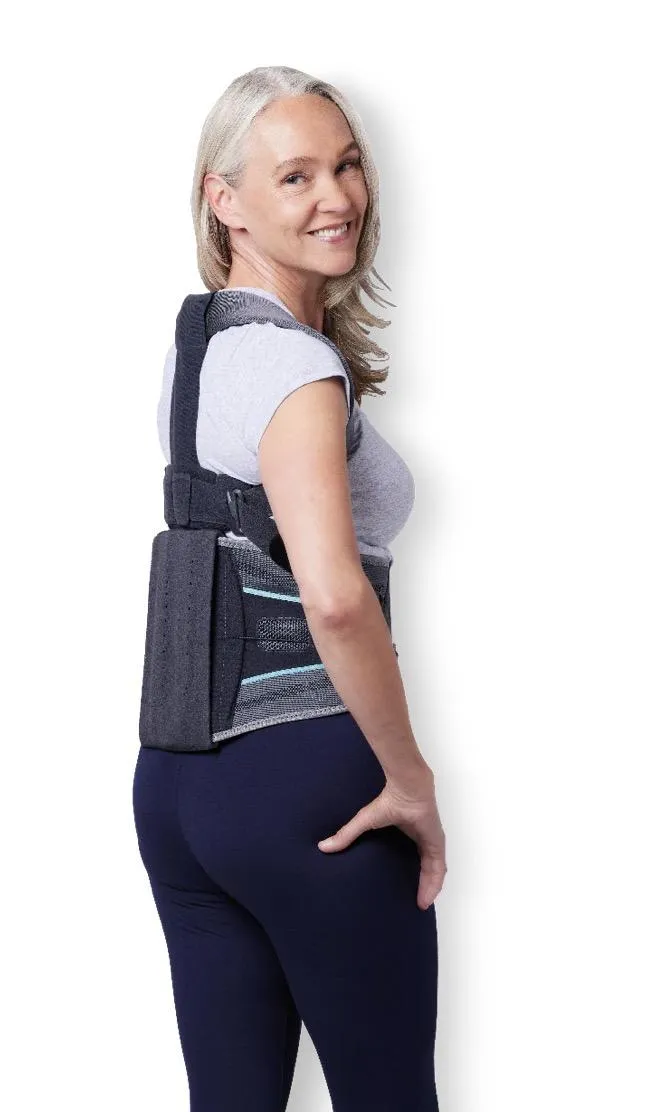
Bracing Beyond the Myths: How Medical Bracing Plays a Critical Role in Pain Management, Recovery, and Patient Independence
For many patients living with chronic back pain, spinal conditions, or post-surgical recovery challenges, medical-grade bracing is often misunderstood, underutilized, or dismissed entirely. In some cases, patients are told to avoid braces due to fears of muscle weakness or dependency. In others, they are left to navigate low-quality retail options that provide little to no therapeutic benefit.
At MCB DME, we frequently see the consequences of these misconceptions firsthand. Patients arrive frustrated, still in pain, and unsure whether bracing is truly a legitimate medical option—or just another temporary fix that will not address their underlying condition.
To help clarify the role of medical-grade bracing, we sat down with Brantley Stricker, Director of Clinical Education at Aspen Medical Products, to discuss what modern bracing actually does, who it helps most, and why education—not avoidance—is the missing link in patient care.
Brantley brings a rare combination of perspectives to this conversation: a clinical background as an orthopedic physical therapist and nearly a decade of experience working directly with providers, hospitals, and pain management clinics across the country. His insights help bridge the gap between outdated assumptions and evidence-based care.
From Physical Therapy to Clinical Education: A Unique Perspective on Bracing
Brantley Stricker has spent his career at the intersection of hands-on patient care and clinical education. Before joining Aspen Medical Products, he earned his Doctorate in Physical Therapy and practiced as an orthopedic physical therapist for five years. He later transitioned into medical device education, spending more than nine years with Aspen—first as a regional sales representative and now as Director of Clinical Education.
Today, his role centers on educating both clinicians and patients about how bracing fits into modern treatment pathways.
"I spend most of my time supporting non-operative care settings," Brantley explains. "That includes interventional pain management, physiatry, chiropractic, physical therapy, and some surgical and acute care environments. Across all of these settings, there's a consistent gap in education when it comes to orthotic care."
That educational gap, he notes, is not the fault of individual providers. Rather, it reflects how little formal training most clinicians receive on bracing during their schooling.
Why Medical-Grade Bracing Is Often Overlooked in Conservative Care
Despite being covered by insurance for decades and supported by growing clinical research, bracing remains underutilized in conservative (non-surgical) treatment plans.
One major reason is a long-standing belief that braces weaken muscles or create dependency.
"For years, practitioners—including physical therapists—were taught to avoid bracing because of fears around muscle atrophy," Brantley says. "What's surprising is that until 2017, there was no real clinical data examining whether those concerns were even valid."
When studies were finally conducted, the results challenged decades of assumptions. The data showed thatmedical-grade bracing does not cause muscle weakness or dependency, even with extended use. Yet many providers and patients still operate under outdated guidance.
This disconnect often leaves patients navigating pain without access to a tool that could meaningfully improve stability, function, and quality of life—particularly for those managing conditions like chronic back pain or recovering from spinal procedures.
What Conditions Commonly Benefit from Medical Bracing?
Medical bracing is not a one-size-fits-all solution, but it plays an important role across a wide range of diagnoses. According to Brantley, bracing tends to fall into two primary categories:
Non-Operative (Conservative) Conditions
These are conditions managed without surgery, often in pain management or rehabilitation settings. Common examples include:
Degenerative disc disease
Spondylosis (arthritic changes in the spine)
Chronic mechanical back pain
Certain instability or alignment issues
"These diagnoses are extremely common," Brantley notes, "but bracing is often overlooked as a treatment option, even when patients are experiencing ongoing pain and functional limitations."
Post-Surgical and Acute Care Conditions
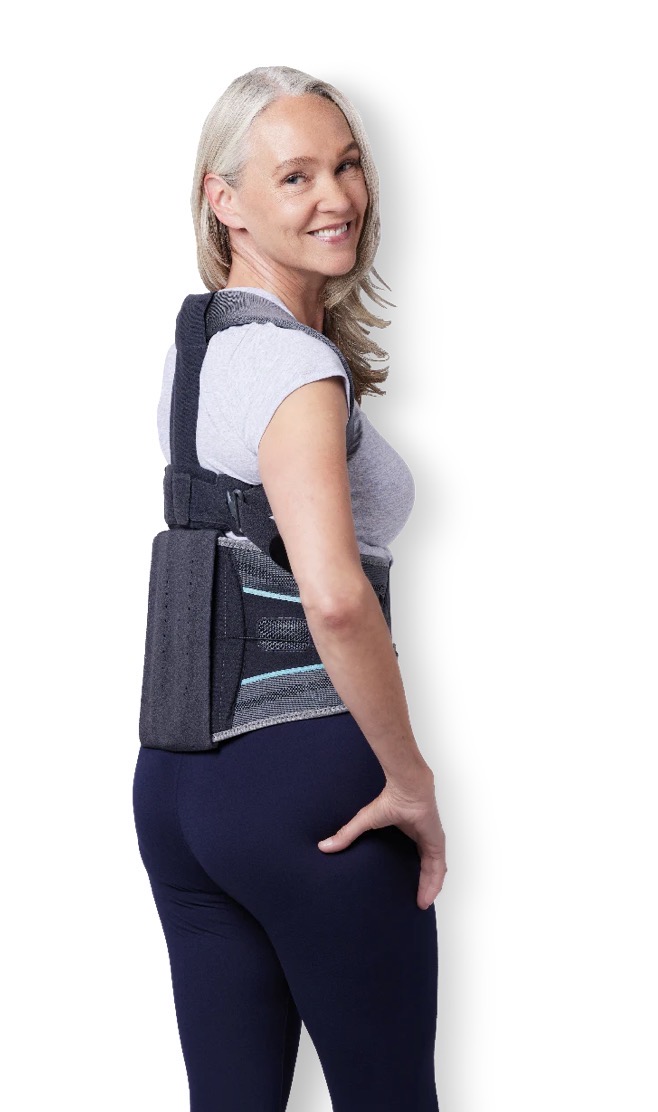
In surgical settings, bracing protocols are typically well-defined and surgeon-directed. Common indications include:
Lumbar or cervical spinal stenosis
Radiculopathy
Post-operative stabilization following spinal procedures
"In surgical cases, bracing is often standard," Brantley explains. "The challenge is getting that same level of acceptance in conservative care environments."
Retail Braces vs. Medical-Grade Bracing: What New Jersey Patients Need to Know
One of the most important distinctions patients can understand is the difference between retail braces and medically coded orthoses.
"A brace purchased online or at a big-box store may offer compression or warmth," Brantley says, "but it does not provide true biomechanical stabilization of the spine or joint."
Medical-grade braces are:
Designed with specific clinical intent
Backed by biomechanical testing and outcome data
Prescribed based on diagnosis and medical necessity
Properly fitted to ensure therapeutic benefit
In contrast, retail braces often rely on placebo effects and do not meaningfully alter spinal mechanics or joint stability.
This distinction matters—especially for patients seeking long-term relief or functional improvement rather than temporary comfort. At MCB DME, our team ensures patients receive professional-grade bracing solutions with proper fitting and ongoing support.
Setting Realistic Expectations: What a Brace Can (and Cannot) Do
Bracing is not a cure-all, and setting proper expectations is essential for patient satisfaction.
For many patients, pain relief or increased stability is felt immediately, often within the first use. Others may notice more gradual improvements, particularly when bracing is used for:
Postural retraining
Proprioceptive feedback
Long-term alignment correction
"In postural or kyphosis-related cases, improvements can take months," Brantley explains. "There's often a structured protocol around how long the brace is worn each day."
What matters most is individualized use. Some patients benefit from wearing a brace during specific activities, while others need more consistent support. The key takeaway is that use should be driven by symptoms—not fear of harm.
The Importance of Proper Fit—and What Happens When It's Wrong
Even the best brace will fail if it is not fitted correctly.
A properly fitted brace should:
Sit symmetrically on the body
Align appropriately with the spine or joint
Feel supportive without causing excessive pressure
Most medical braces are adjustable and can accommodate changes in swelling, weight, or comfort. When a brace feels ineffective or uncomfortable, resizing or refitting is often the solution—not abandonment.
At MCB DME in Hawthorne, NJ, this is where professional fitting and follow-up make a significant difference in outcomes.
A Real-World Example: When the Right Brace Changed Everything
Brantley shared a case that illustrates how critical proper brace selection can be.
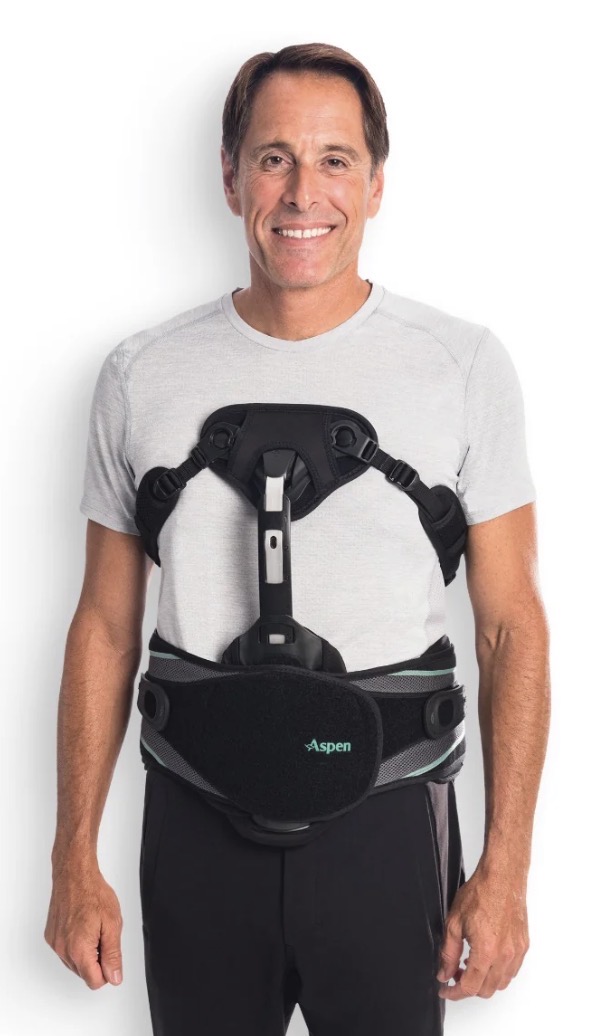
A patient with severe scoliosis had been given a rigid brace that was not designed for her condition. Unsurprisingly, it failed to relieve her pain. After being properly evaluated and fitted with a brace designed specifically for scoliosis, her pain improved dramatically.
"She was able to return to work as a schoolteacher," Brantley recalls. "She wore the brace six to eight hours a day and regained function she thought she had lost permanently."
Stories like this highlight why matching the brace to the diagnosis is just as important as bracing itself.
Why Patient Advocacy Matters More Than Ever
Many patients assume that if their provider does not mention bracing, it must not be appropriate. Unfortunately, that is not always the case.
"Patients shouldn't feel discouraged from asking questions," Brantley says. "There is credible clinical data supporting bracing, and patients deserve access to that information."
Trusted resources—including manufacturer education, peer-reviewed studies, and experienced DME providers—are essential for cutting through misinformation found online or in social media groups.
How DME Providers and Clinical Teams Can Work Better Together
Effective bracing outcomes depend on collaboration. When DME providers understand the clinical data and communicate it clearly to physicians, adoption improves.
"Most physicians are genuinely interested once they see the evidence," Brantley explains. "They just haven't been exposed to it."
This is where patient-focused DME providers like MCB DME play a vital role—bridging education gaps, ensuring proper fit, and supporting long-term success through insurance coordination and ongoing patient support.
What Every Patient Should Know Before Considering a Brace
Braces are not glamorous. They are not sleek or invisible. But they are effective.
"If patients give bracing a fair chance," Brantley says, "about three out of four will experience meaningful improvement."
That success rate is not accidental—it reflects decades of refinement, research, and real-world clinical use through evidence-based pain therapy approaches.
Final Thoughts: Education Changes Outcomes
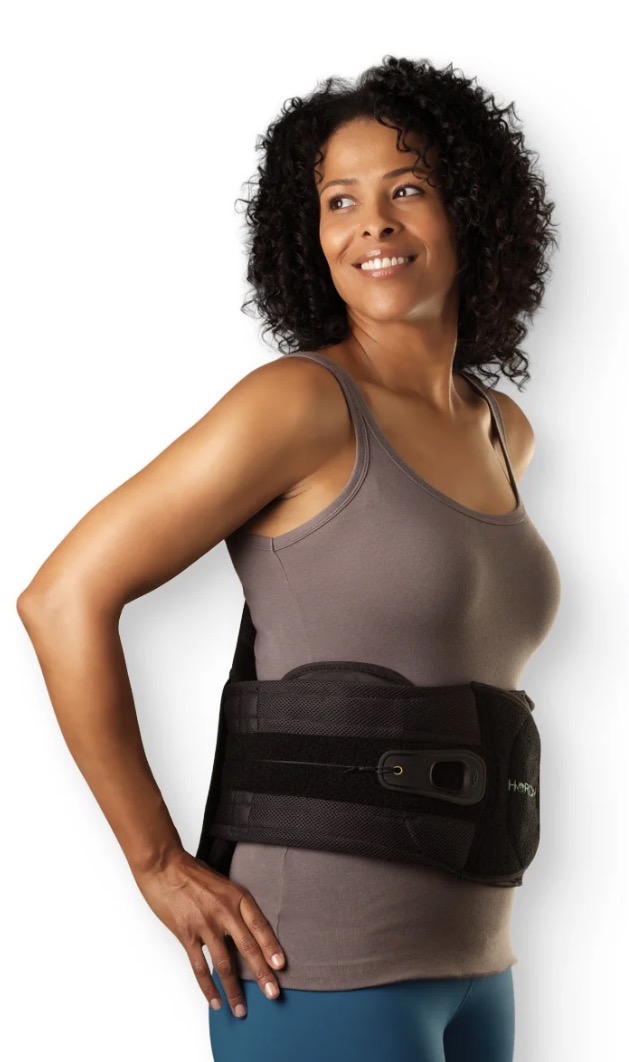
Medical bracing is not outdated, dangerous, or unnecessary. When used appropriately, it is a powerful, evidence-based tool that improves stability, reduces pain, and helps patients maintain independence.
At MCB DME, our mission is to ensure patients and providers alike understand the full range of options available to them—without myths, misinformation, or unnecessary barriers.
If you are considering bracing or have been told conflicting information, our team is here to help guide you through the process with clarity, compassion, and expertise. We serve patients throughout Northern New Jersey with professional fitting services, insurance coordination, and ongoing support.
For additional questions, patients can also use Lumi, our 24/7 chatbot on mcbdme.com, to explore bracing, compression therapy, and other DME solutions anytime.
Get Expert Bracing Support in Northern New Jersey
MCB DME specializes in professional-grade orthopedic bracing for patients throughout Hawthorne, Passaic County, Bergen County, and the surrounding New Jersey area. Our team works directly with your insurance provider to handle authorizations and ensure you get the medical equipment you need—fast and hassle-free.
Contact us today:
📞 Phone:(973) 553-0777
🏢 Address: 293 Lafayette Avenue, Suite 104, Hawthorne, NJ 07506
🌐 Website:mcbdme.com