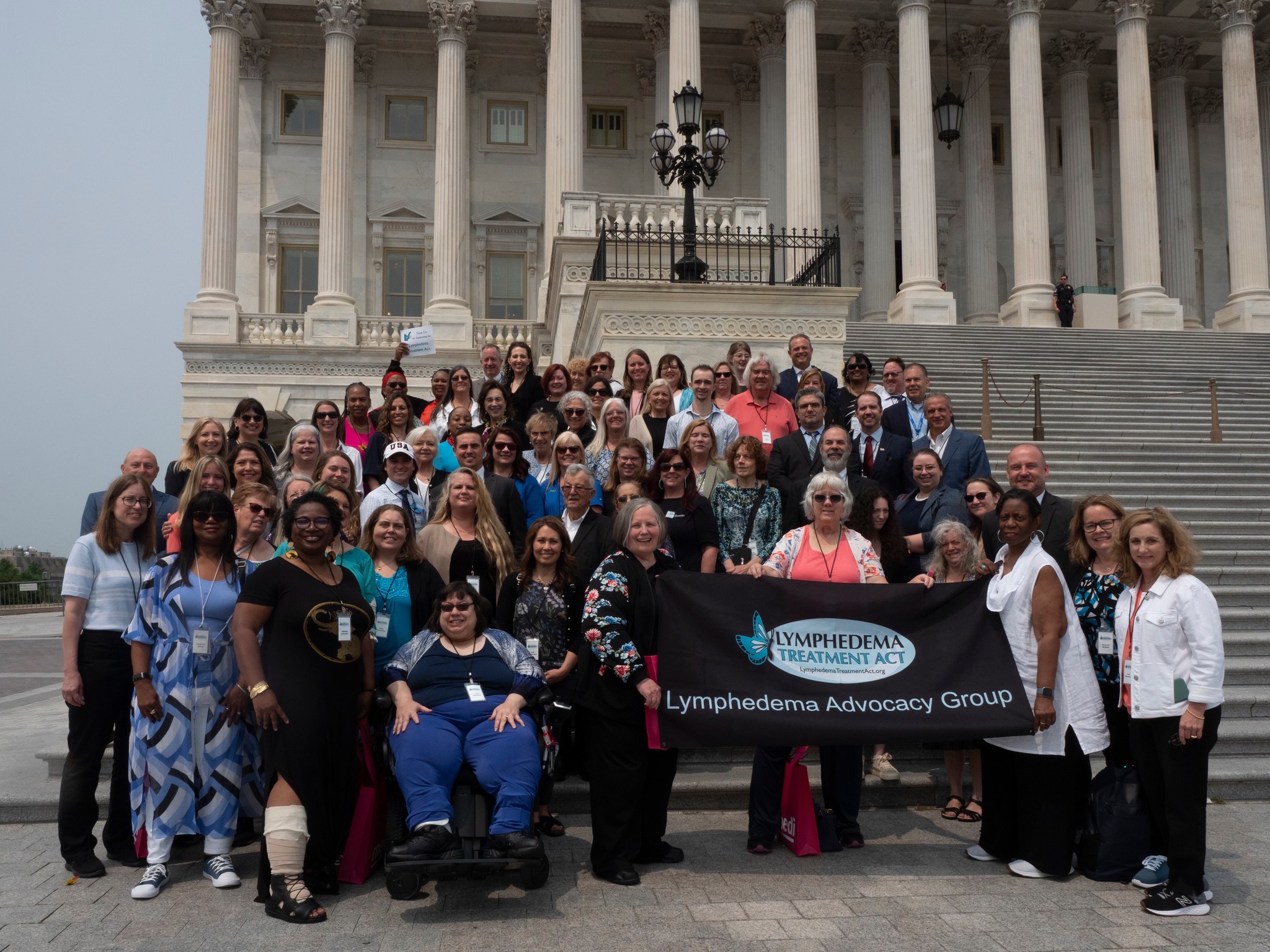
LTA 2026 Update for Providers: SC Modifier, Codes, Coverage
Two years into the Lymphedema Treatment Act, the picture for referring providers and DME suppliers is clearer — and noticeably more demanding. What started in January 2024 as a long-overdue Medicare benefit has settled into its operational phase: new modifier requirements, expanded HCPCS coding, refined fee schedules, and a documentation reality that quietly catches many practices off guard. Most of what changed in 2026 doesn't change what the LTA covers; it changes how claims must be coded, attested to, and substantiated in the medical record.
This guide is for prescribing physicians, nurse practitioners, physician assistants, certified lymphedema therapists, and the billing and intake staff who keep their workflow moving. It covers what shifted on January 1, 2026 and April 1, 2026, the documentation requirements that are now actively driving denials, and where MCB DME picks up the operational load so your practice can focus on clinical care rather than DMEPOS paperwork.
If you've already been prescribing under the LTA since 2024, treat the rest of this article as a tune-up. If you're newer to compression prescribing, this is the practical orientation we wish every referring practice had on day one.

A Quick Refresher: What the LTA Covers
The Lymphedema Treatment Act, signed into law in late 2022 and effective January 1, 2024, established a new Medicare Part B benefit category — Lymphedema Compression Treatment Items — under Section 1861(s)(2)(JJ) of the Social Security Act. The benefit is administered through DMEPOS suppliers and the Durable Medical Equipment Medicare Administrative Contractors (DME MACs).
Covered items, per the final rule:
Standard and custom-fitted daytime gradient compression garments — sleeves, stockings, gauntlets, gloves, knee-highs, thigh-highs
Adjustable compression wraps with hook-and-loop straps
Nighttime compression garments — foam-padded sleeves, stockings, and wraps
Compression bandaging systems and supplies for both decongestive and maintenance phases
Accessories — donning aids, fillers, linings, padding, zippers
Frequency, per affected body part:
3 daytime garments or wraps every 6 months
2 nighttime garments every 2 years
Bandaging supplies and accessories without a fixed cap when medically necessary
Replacement for loss, theft, irreparable damage, or significant change in patient condition
Coverage applies to patients with a confirmed lymphedema diagnosis (ICD-10 codes I89.0, Q82.0, I97.2, or I97.89), a valid prescription, and supply through a Medicare-enrolled DMEPOS supplier. Once the patient meets the Part B annual deductible, Medicare pays 80% of the approved amount and the patient — or their secondary insurance — picks up the remaining 20%. As of 2026, the Lymphedema Advocacy Group projects roughly 2.8 million Medicare beneficiaries will be eligible for this benefit.
That's the floor. Now the changes.
What Changed on January 1, 2026: The SC Modifier and Friends
The biggest 2026 operational change is a modifier framework that DME MACs (Noridian and CGS) jointly published on December 4, 2025. Four modifiers now govern lymphedema compression claims, with specific behavior effective for dates of service on or after January 1, 2026:
SC — Medically necessary service or supply
Per the joint DME MAC publication, the SC modifier must be appended to lymphedema compression treatment item claims when the statutory and reasonable-and-necessary requirements have been met. Critically, the supplier is not required to have all required documentation in hand at claim submission — appending SC functions as a supplier attestation that requirements are satisfied. This is significant: it shifts attestation responsibility to the supplier and creates a clear audit trail when documentation is later requested.
GA — Waiver of liability (ABN on file)
Used when a denial is expected on R&N grounds and the beneficiary has signed a valid Advance Beneficiary Notice of Noncoverage (ABN) accepting financial responsibility. Claims submitted with GA receive a medical necessity denial, with liability falling on the patient. GA must not be used without a valid ABN.
GY — Item statutorily excluded
Used when the item or service is statutorily excluded from any Medicare benefit. Claims with GY are denied as statutorily noncovered, with the beneficiary liable.
GZ — Not R&N, no ABN
Used when a denial is expected on R&N grounds and no ABN was issued. The supplier accepts liability for the expected denial.
For most legitimate lymphedema prescriptions through a knowledgeable supplier, SC is the modifier you'll see on the claim. The other three exist for edge cases and audit-preparedness. Right (RT) and left (LT) modifiers continue to be required for laterality, with bilateral items billed as two separate claim lines — never RTLT with 2 units of service on a single line, which the MACs reject as incorrect coding.

April 1, 2026 Fee Schedule Adjustments and Recent Code Activity
CMS continues to refine the fee schedule and code set. A few recent developments worth flagging:
April 1, 2025: 5 new HCPCS codes added and 5 existing codes revised, addressing gaps that emerged in the first year of LTA implementation.
April 1, 2026: New fee amounts implemented for previously-priced codes including A6544 (gradient compression stocking, garter belt — $38.90) and A6548 (accessory to custom gradient compression garment, silicone band — $20.80).
2026 fee schedule update: Annual CPI-U adjustment of approximately 2.7%–2.8% applied to existing rates.
NOS codes — A6519 (nighttime garment NOS), A6549 (daytime garment NOS), A6584, A6593, and A6609 — require a narrative description in the claim's NTE 2300/2400 field or Item 19 of a paper claim, including the item description, units of service definition (per inch, foot, yard), and explicit reference to lymphedema diagnosis as documented by the treating practitioner.
The full HCPCS set now includes 78 lymphedema-specific codes plus 3 updated A codes used for surgical dressings — 81 total. Pricing, Data Analysis and Coding (PDAC) registration is voluntary for most lymphedema items; a knowledgeable supplier maps the prescribed item to the correct code as part of intake.
The Documentation Rule That Catches Practices Off Guard
This is the single most consequential operational point in 2026, and it's quietly behind a meaningful share of denials:
The lymphedema diagnosis must be documented by the treating practitioner — MD, DO, NP, PA, or CNS — in the beneficiary's medical record. Documentation from a licensed clinical medical practitioner (LCMP) — including physical therapists, occupational therapists, and certified lymphedema therapists — does not satisfy this requirement, even if the medical records are countersigned by the prescribing practitioner.
In practical terms: a CLT's evaluation note describing limb volume, pitting, fibrosis, and stage is invaluable clinical evidence — but it is not, by itself, the diagnostic documentation Medicare requires. The treating physician, NP, or PA needs the diagnosis documented in their own progress note or assessment, with the corresponding ICD-10 code, before the supplier can confidently attest with the SC modifier.
The cleanest workflow for referring practices:
Prescribing clinician documents lymphedema in their own note with ICD-10 code (I89.0, Q82.0, I97.2, or I97.89).
Prescription specifies item category — daytime garment, nighttime garment, adjustable wrap, bandaging — with quantity and laterality.
For custom-fitted garments, the prescribing clinician (often informed by the CLT's evaluation) adds a clinical note explaining why custom is medically necessary versus standard.
Patient is referred to an enrolled DMEPOS supplier with the prescription and insurance information.
Supplier handles measurement, fitting, billing, and any required follow-up documentation.
Practices that delegate diagnostic documentation entirely to their CLT partners — even excellent ones — will see denials. The diagnosis lives in the prescribing clinician's note.
Custom vs Standard: Getting the Clinical Justification Right
Medicare covers both standard-sized and custom-fitted gradient compression garments. The criteria for custom, drawn directly from DME MAC guidance, are reasonably specific:
The proximal portion of the limb is significantly greater in circumference than the distal limb (limb shape doesn't fit a standard size grade).
Skin and tissue have folds or contours requiring a specific knitting pattern.
The patient cannot tolerate the fabric composition of a standard garment.
Anatomical considerations — head and neck, truncal, genital, breast, pediatric — that off-the-shelf sizing cannot accommodate.
The clinical note accompanying a custom prescription should reference one or more of these factors explicitly. "Custom required" without supporting clinical detail is a frequent cause of denials and additional documentation requests. A short, specific note ("circumferential measurements demonstrate proximal-to-distal ratio outside standard size grading; custom required") is dramatically more durable in audit than vague language.
For broader compression therapy support, see mcbdme.com/compression.
Replacement, Frequency, and the RA Modifier
The frequency limits — 3 daytime per 6 months, 2 nighttime per 2 years, per affected body part — are calendar-based from the date of service of the first item dispensed in the cycle. A patient who receives one daytime sleeve in January is not eligible for additional units in that body part until July, regardless of how many of the three allowed garments they actually took.
Replacement outside the cycle is allowed when the garment is lost, stolen, or irreparably damaged, or when the patient's condition changes meaningfully. The RA modifier is used in those cases, and the medical record should document the reason for early replacement. "Garment no longer fits because of significant volume reduction" is a common, well-supported reason — many manufacturers (Medi, Solaris, Thuasne) offer free reduction alterations on custom garments, but when alteration isn't possible, RA-coded replacement is the path.
Medicare Advantage, Commercial Plans, and the Real-World Mix
Medicare Advantage (Part C) plans are required to cover everything Original Medicare covers, including LTA-defined compression items. In practice, MA plans frequently impose:
Different supplier networks — some MA plans contract narrowly, and an out-of-network DMEPOS supplier may face denial despite the underlying coverage.
Prior authorization for custom items or higher-cost garments.
Different documentation submission portals and timelines.
The benefit is the same; the operational path is plan-specific. For MA patients, MCB DME verifies network status and PA requirements at intake before fitting begins.
Commercial plans are not legally required to mirror the LTA, but most major payers have aligned because the clinical and economic case is strong. Coverage details still vary by plan — particularly around nighttime garments, which some commercial plans treat differently from Medicare's 2-per-2-years framework.
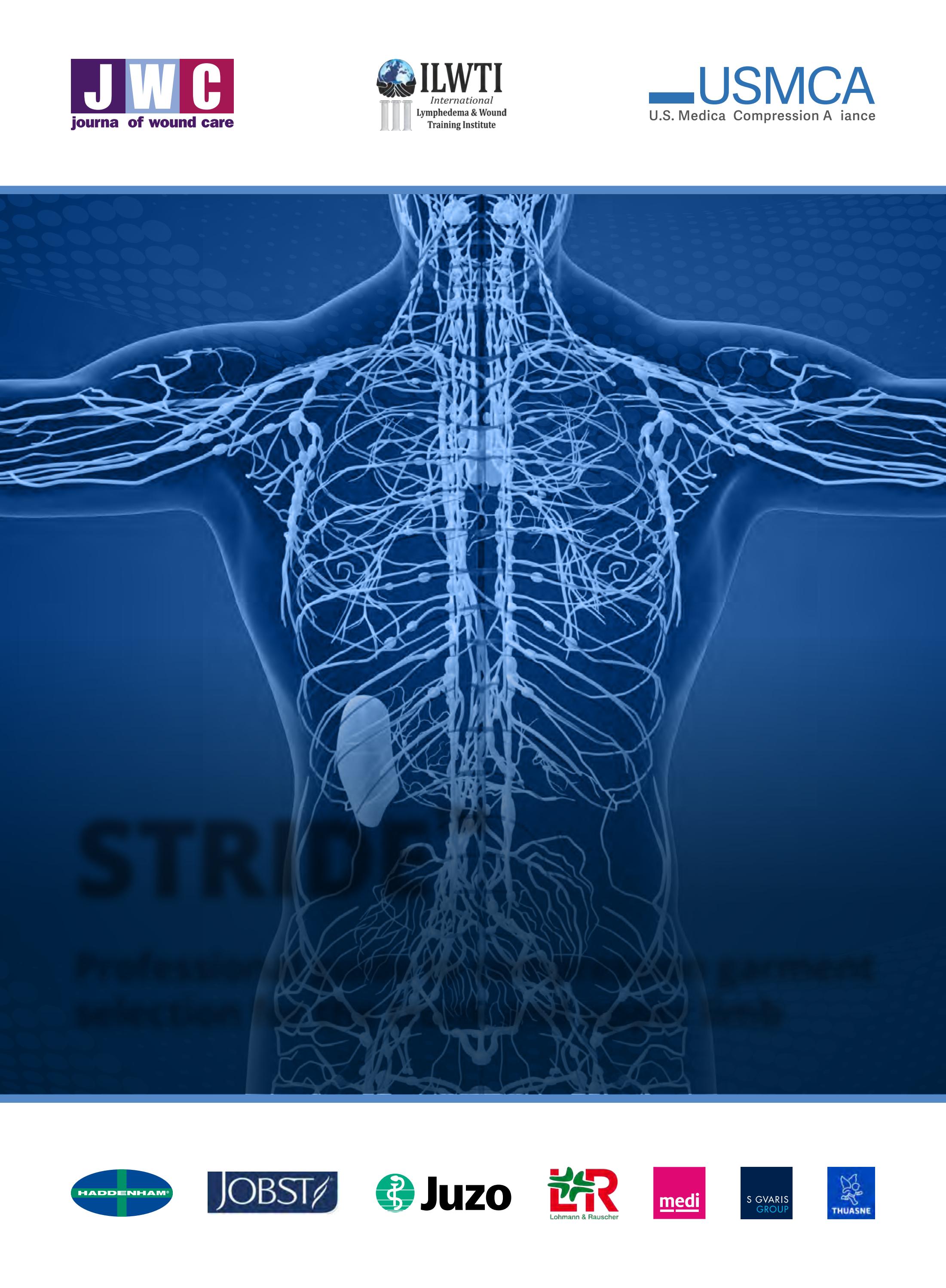
STRIDE 2.0: An Updated Compression Selection Algorithm
In October 2025, an international expert panel published the second iteration of the STRIDE algorithm for compression therapy selection in lymphedema. The original 2019 STRIDE focused on the lower limb; STRIDE 2.0 extends to upper limbs, breast, and trunk, and was developed with input from Noridian and CGS representatives among others. For practices building or refining lymphedema compression protocols, STRIDE 2.0 is a useful evidence-anchored framework — it doesn't replace clinical judgment, but it gives prescribers a structured starting point that maps cleanly onto the LTA's covered item categories.
The Five Most Common Denial Drivers in 2026
From operational pattern observation across the supplier and DME MAC publication record:
Diagnosis documented only in CLT/PT note. Discussed above. The diagnosis must come from MD/DO/NP/PA/CNS.
Custom prescription without clinical justification. Generic "custom needed" language without anatomical, dimensional, or tolerance specifics.
Wrong frequency cycle assumption. Trying to dispense additional daytime garments before the 6-month window resets, without RA documentation.
NOS code claims without a complete narrative. A6519, A6549, A6584, A6593, A6609 require explicit description and unit-of-service context in the claim narrative.
Bilateral billing on one line. RTLT with 2 UOS is rejected as incorrect coding; bilateral items must be two separate claim lines.
A well-run intake at the DMEPOS supplier catches most of these before claim submission. The ones that slip through almost always trace back to a documentation gap on the prescribing side.
Where MCB DME Fits in Your Workflow
MCB DME is a Medicare-enrolled DMEPOS supplier serving northern New Jersey and the broader region. For referring practices, this means:
End-to-end DMEPOS handling. Once a patient arrives with a prescription and insurance information, MCB DME manages measurement, manufacturer selection, custom orders, fitting, billing, follow-up, and warranty work.
Direct insurance billing. Medicare, Medicaid, and most commercial plans billed directly. Patients are not asked to navigate DMEPOS paperwork independently.
Coding and modifier compliance. SC, GA, GY, GZ, RT/LT, and RA modifier handling under the 2026 framework.
Custom garment expertise. Coordination with manufacturer custom design centers (Solaris, Thuasne, medi, Juzo, Sigvaris) for complex cases.
Documentation feedback. When prescriptions arrive with gaps that would generate denials, our intake team flags them back to the referring practice for correction before the order ships — saving denial-and-resubmit cycles.
Provider resources. Prescription forms, fitter information, and referral support at mcbdme.com/providers.
BioCompression travel letter for patients flying with custom or foam-filled garments — available on request to any MCB DME patient via mcbdme.com/contactus.
Frequently Asked Questions
Does the SC modifier requirement change what I need to document as a prescriber?
No, the underlying documentation requirements were already in place. The SC modifier is a supplier-side attestation that those requirements have been met. What it does change in practice is that suppliers are now relying more visibly on the prescriber's documentation when they attest, which makes prescriber-side gaps more consequential.
Can a certified lymphedema therapist establish the lymphedema diagnosis?
Not for Medicare claim purposes. The diagnosis must be documented by an MD, DO, NP, PA, or CNS in the beneficiary's medical record. CLT evaluations are valuable supporting clinical evidence — particularly for severity, custom justification, and treatment planning — but they do not replace the prescribing clinician's diagnostic note.
What are the covered ICD-10 codes?
I89.0 (lymphedema, not elsewhere classified), Q82.0 (hereditary lymphedema), I97.2 (postmastectomy lymphedema syndrome), and I97.89 (other postprocedural complications and disorders of the circulatory system). Claims with non-listed diagnoses are denied as noncovered.
Do I need to specify "custom" on the prescription?
Yes, for custom-fitted garments, the prescription should explicitly indicate "custom" along with a brief clinical justification. The CLT's evaluation can inform the justification but the prescribing clinician's note should reflect it.
Are pneumatic compression pumps covered under the LTA?
No. Pneumatic compression devices (PCDs) including those used for lymphedema (E0650/E0651/E0652 and segmental gradient appliances) remain under their existing DME benefit category and are not part of the LTA framework. MCB DME provides both LTA-covered compression garments and traditional DME pumps.
How does Medicare Advantage handle these items?
MA plans must cover everything Original Medicare covers, including LTA items. Operationally, expect plan-specific networks, prior authorization triggers (especially for custom items), and submission portals that differ from straight Part B. Network and PA status should be verified at intake.
What if the patient's commercial plan doesn't cover compression?
Most major commercial payers have aligned with Medicare's framework, but coverage isn't legally guaranteed for non-Medicare plans. When a commercial plan denies, an appeal referencing the LTA framework, the clinical evidence base, and the long-term cost case for compression often succeeds. MCB DME's billing team handles appeal documentation in coordination with the prescribing practice.
How quickly can a patient be fit after the prescription is received?
Standard ready-to-wear garments are typically dispensed within several business days of intake completion. Custom garments — TributeNight, custom Mobiderm, custom circaid Profile, ExoCustom, custom Juzo, etc. — typically take 2–4 weeks from order placement, depending on the manufacturer and complexity. We communicate timelines explicitly at intake.
Key Takeaways
The LTA framework didn't fundamentally change in 2026 — but the operational requirements around it tightened. SC modifier attestation, four-modifier framework, and refined fee schedules all took effect on January 1, 2026.
The single highest-yield documentation point for prescribers: the lymphedema diagnosis must live in the MD/DO/NP/PA/CNS's own note, not solely in a CLT or PT evaluation.
Custom prescriptions need specific clinical justification — anatomical, dimensional, or tolerance — to survive audit and avoid denial cycles.
Frequency limits are calendar-based (6-month and 2-year cycles per affected body part) and the RA modifier handles documented out-of-cycle replacements.
Medicare Advantage operationally differs from Original Medicare even where coverage is identical; verify network and PA at intake.
A knowledgeable DMEPOS supplier absorbs most of the operational complexity — coding, modifiers, manufacturer coordination, billing, appeals — and surfaces documentation gaps early.
Next Steps
If your practice prescribes for lymphedema patients, three concrete actions tend to pay off most quickly:
Audit your current prescription template. Does it explicitly capture the diagnosis with ICD-10 code in your own note, the item category, quantity, laterality, and (for custom) clinical justification? If any of those are inconsistent, a one-time template update prevents months of denials.
Map your CLT and PT relationships to your documentation flow. Their evaluations are clinically essential and operationally complementary — but they aren't a substitute for prescriber-side diagnostic documentation.
Establish a referral relationship with a DMEPOS supplier you trust. Most of the operational load described above lives downstream of the prescription. The right supplier closes that loop without your billing team having to learn DME MAC modifier rules.
For prescription forms, referral resources, and direct contact with the MCB DME team, visit mcbdme.com/providers. For broader lymphedema management resources, compression therapy services, or to reach our intake and billing team directly, see mcbdme.com/contactus.
Related Resources:
MCB DME is a durable medical equipment provider based in Hawthorne, New Jersey, specializing in lymphedema management, compression therapy, diabetic footwear, arterial pumps, and bracing and prosthetics. MCB DME is a Medicare-enrolled DMEPOS supplier and bills Medicare, Medicaid, and most commercial insurance plans directly for covered lymphedema compression treatment items.
Disclaimer: This article is for educational purposes only and does not constitute legal, billing, or compliance advice. Coverage, documentation requirements, modifier use, and HCPCS coding are subject to change; always verify current CMS, DME MAC, and payer policies for guidance specific to your practice. MCB DME does not guarantee insurance approval for specific devices or patients.