
Understanding Compression Therapy: A Patient-Friendly Guide
An Interview with Bryan Groleau, Director of Clinical Education at MediUSA
Compression therapy is one of the simplest, safest, and most effective tools used in medicine today — yet it is also one of the most misunderstood.
Many patients begin their compression journey with uncertainty: Why do I need this? What level should I wear? Why does it matter how it fits? Will this help me, or could it make things worse?
To answer those questions clearly and compassionately, we spoke with Bryan Groleau, a Certified Lymphedema Therapist with more than 20 years of clinical experience and the Director of Clinical Education at MediUSA, one of the world’s leading compression manufacturers. Bryan has worked in outpatient clinics, wound clinics, home health, and now oversees a nationwide team dedicated to compression education.
His goal — and ours — is simple: help patients understand what compression is, why it matters, and how to use it safely and confidently.
Bryan’s Background: Clinical Roots and a Passion for Education
Before stepping into his role at MediUSA, Bryan spent years directly treating patients with lymphedema, swelling, and complex wounds.
“I’m a certified lymphedema therapist and have been since 2003,” he explains. “I specialized in lymphedema and wound care, ran outpatient clinics, and built lymphedema and wound care programs within home health.”
This hands-on experience shapes everything he teaches.
Today, Bryan leads a team of eight clinical educators who travel across the country to train clinicians, fitters, and medical equipment providers. His work helps ensure that patients receive garments that are:
Properly fit
Appropriate for their stage of disease
Matched to the right materials
Worn safely and comfortably
He also serves on the Board of the Lymphology Association of North America (LANA), supporting nationwide standards in lymphedema education.

MediUSA: A Global Company Focused on Compression Excellence
MediUSA is part of a global organization started in Germany over 75 years ago. While known primarily for compression, the company also produces orthopedic supports, foot care products, and wound care technology.
“We manufacture medical compression for vein disease, lymphedema, and wound care,” Bryan explains. “Some products are made in the U.S., like our inelastic Circaid® line in North Carolina. Custom flat-knit garments are produced in Germany.”
This global-local combination ensures high-quality manufacturing while maintaining access to custom options for patients with unique limb shapes or advanced swelling.
What Are Compression Garments?
Many people associate compression with athletic socks or travel stockings, but medical compression is very different — and far more specialized.
“A proper medical compression garment has pressure built into it in a specific way,” Bryan explains. “It uses gradient compression, where the pressure is highest farthest away from the body and gradually decreases as you move up the limb.”
This gradient is what moves fluid — not by pushing it out, but by encouraging healthy circulation.
Why gradient compression matters
A correct compression garment will:
Support veins so they can pump blood back toward the heart
Assist lymphatic vessels in returning lymph fluid
Reduce swelling by improving circulation, not forcing fluid around
Decrease the feeling of heaviness, fatigue, or throbbing in limbs
Most importantly, medical compression is measured and controlled, unlike non-medical options sold online.

Medical-Grade vs. Over-the-Counter Compression: Why the Difference Matters
You may see compression socks labeled 10–15 mmHg or 15–20 mmHg in stores, but Bryan cautions that these garments do not replace medical-grade products.
“Medical-grade compression is defined by its compression level. But the materials matter just as much as the numbers.”
Two garments with the same pressure rating can behave completely differently depending on how they’re constructed.
The three primary material types Bryan teaches
Highly elastic garments – stretch easily, comfortable, but offer less containment.
Lower-elastic garments – more structured, better containment for moderate swelling.
Inelastic garments – little to no stretch; ideal for advanced lymphedema or poor tissue tone.
“The less elastic a garment is, the more containment you get,” Bryan explains. “That containment is crucial for patients whose swelling fluctuates or whose tissue needs support.”
This is why simply picking a size based on a chart online can lead to problems:
Rolling
Bunching
Pinching
Localized pressure points
Tourniquet effects
Patients often interpret these issues as “compression doesn’t work for me,” when the real issue is the wrong material or wrong fit.
Insurance Coverage and the Lymphedema Treatment Act
One of the biggest developments in compression care happened in 2024: Medicare began covering compression garments for lymphedema.
“As of 2024, Medicare covers both ready-to-wear and custom garments for patients with a lymphedema diagnosis,” Bryan explains. “It’s a huge step forward.”
This change came after the Lymphedema Treatment Act, passed in 2022, created a framework for coverage.
Coverage typically includes:
Daytime compression
Nighttime compression (when prescribed)
Custom flat-knit garments
Adjustable inelastic wraps
MediUSA does not process insurance claims — that responsibility falls to DME providers like MCB DME — but MediUSA plays a key role in training providers on product selection, medical necessity, and documentation requirements.
Are Compression Garments Eligible for FSA or HSA Coverage?
Yes — when medically necessary.
“It’s similar to glasses,” Bryan says. “Sunglasses aren’t covered, but prescription glasses are. If compression is prescribed for a medical reason, FSA or HSA funds can often be used.”
This is especially important for patients whose insurance includes deductibles or coinsurance responsibilities.
Are Compression Garments Safe?
One of the most common questions patients ask is whether compression garments are actually good for them.
“Compression garments are wonderfully good for you,” Bryan explains. “I wear them myself on planes because they help increase circulation, even in people without disease.”
Benefits include:
Improved circulation
Reduced swelling
Less leg heaviness
Better lymphatic return
Support during long periods of sitting or standing
However, there are exceptions.
When compression may NOT be recommended
Patients with:
Severe ischemia
Certain unmanaged cardiac conditions
“Patients with severe arterial disease shouldn’t wear compression until evaluated,” Bryan notes. “But for most people, compression is extremely safe.”
This is why professional fitting and provider communication are essential.
Can Compression Ever Make Lymphedema Worse?
Surprisingly — yes. But only when fit is poor or the garment is fundamentally incorrect for the patient.
"Compression can absolutely make lymphedema worse if used incorrectly,” Bryan says. “A sleeve that rolls, bunches, or cuts into tissue can create a tourniquet effect.”
He shares a common example:
A patient buys an online compression sleeve, finds it too long, folds it down — and unintentionally doubles the compression at the top of the limb.
“That blocks lymph flow. Instead of helping, it makes swelling worse. This is why correct fit matters.”
The Importance of Fitting: Why Patients Should Not Go It Alone
If there is one message Bryan returns to repeatedly, it is this:
“Get properly fit.”
Proper fitting ensures:
Correct limb circumference measurements
Correct length (no folding or rolling required)
Correct compression level
Correct material type
Correct style for the patient’s condition and stage of disease
Clinicians trained by MediUSA learn how to evaluate not just measurements, but:
Tissue tone
Limb shape
Skin integrity
Patient mobility
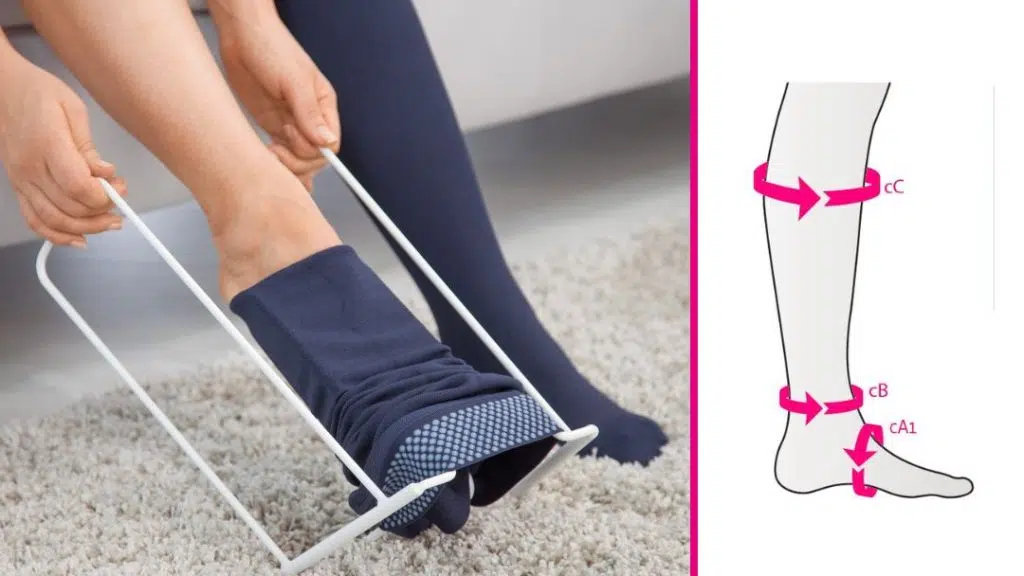
Dexterity (for donning and doffing)
Lifestyle needs
This holistic approach prevents nearly all of the negative outcomes patients fear.
How Long Should Compression Be Worn?
The answer varies significantly.
“Every patient has a different level of need,” Bryan explains. “Some only need compression during the day. Others need both day and night garments. Some may need round-the-clock compression for a period of time.”
Most importantly, Bryan emphasizes gradual integration.
“If someone is overwhelmed and told to wear compression 24/7 immediately, they may never wear it at all. The better approach is: let’s start somewhere. Let’s find your personal baseline and build from there.”
This patient-centered strategy dramatically increases success and long-term compliance.
Traveling With Compression: Why Bryan Always Wears It on Planes
Holiday travel, long flights, and prolonged sitting are common triggers for swelling.
Bryan practices what he teaches:
“On a plane, I wear 15–20 mmHg compression. Even without vein disease, compression helps with circulation during long periods of immobility and pressure changes.”
For patients with vein disease, swelling, or lymphedema, compression during travel is strongly recommended.
Common Misconceptions About Compression Therapy
Bryan addresses several frequent misconceptions that keep patients from benefiting fully from compression.
Misconception 1: “Compression is supposed to be uncomfortable.”
Incorrect. Compression should feel supportive, not painful. Pain indicates:
Wrong size
Wrong garment type
Garment applied incorrectly
Possible medical contraindication
Misconception 2: “Any compression is better than none.”
“That’s actually not true,” Bryan explains. “The wrong garment can absolutely worsen swelling.
Misconception 3: “If compression is too hard to put on, it isn’t right for me.”
There are options designed specifically for:
Older adults
Patients with arthritis
Individuals with reduced hand strength
People who cannot pull garments over the foot
Inelastic wraps with Velcro-style closures often solve these challenges.
Misconception 4: “Compression is one single product category.”
In reality, compression includes:
Flat-knit garments
Inelastic wraps
Nighttime garments
Custom garments
Ready-to-wear garments
Matching the product to the patient is part of what makes compression successful.
Helping Patients Navigate an Overwhelming Market
Today’s compression market includes dozens of brands and countless models. Online retailers add further confusion.
Bryan compares it to buying a car:
“If you walk into a dealership and see a lot full of cars, you don’t know what’s right until someone explains the features and matches them to your needs. Compression is the same way.”
This is why Bryan encourages patients to ask questions:
Why this material?
Why this compression level?
Why this length?
Why this brand?
How should this feel?
How long should I wear it?
What should I avoid?
Patients who understand these factors are far more likely to wear compression consistently — and to experience meaningful results.
Education: The Foundation of Compression Success
One of Bryan’s strongest beliefs is that education influences compliance more than anything else.
“Don’t be compliant because someone told you to. Be compliant because you understand why it matters.”
When patients understand:
What compression does,
Why it’s prescribed,
How it prevents complications, and
What can happen without it,
they are better equipped to incorporate compression into daily life.
And they are more likely to return for refits, explore alternative garments, or ask questions when something doesn’t feel right.
Bryan’s Final Advice for Patients
When asked for one piece of advice for anyone beginning compression therapy, Bryan doesn’t hesitate.
“Get properly fit. That is the starting point for everything.”
A correct fit leads to:
Better comfort
Better outcomes
Fewer complications
Less frustration
Long-term consistency
It also helps patients build confidence — something Bryan believes is essential for success.
Final Thoughts
Compression therapy may seem complicated at first, but with proper education, a good fitter, and the right garment, it becomes one of the most effective tools for managing swelling and supporting circulation. Bryan’s insights highlight the importance of:
Understanding why compression is prescribed
Choosing the correct level and material
Seeking professional measurement and fitting
Using compression consistently, safely, and confidently
For patients living with vein disease, lymphedema, chronic swelling, or even everyday leg fatigue, compression is more than a garment it’s a form of long-term support for overall wellness.
If you have any questions about your own journey with compression garments, feel free to reach out to us on our website, where you can ask our mascot Lumi the Lymphedema owl and questions you have, email us at [email protected] or give us a call at (973) 553-0777.