
A NJ Doctor's Guide to Referring Lymphedema Patients for DME — What to Prescribe, What's Covered, and What to Expect
If you're treating patients with lymphedema in Bergen County or anywhere across Northern New Jersey, your prescription is the gateway to coverage. Since the Lymphedema Treatment Act (LTA) took full effect in 2024 — with important billing updates added in January 2026 — Medicare now covers compression garments, wraps, bandaging supplies, and pneumatic compression pumps for diagnosed lymphedema patients. But coverage only flows when the clinical documentation is complete, the diagnosis code is correct, and the order is written in the right format.
This guide is written for NJ prescribers: primary care physicians, oncologists, vascular surgeons, nurse practitioners, and physician assistants who refer patients for DME. It covers exactly what Medicare needs from you, how to write orders that get approved on the first submission, and what MCB DME does on the backend so your staff doesn't have to carry the administrative burden.
Why This Matters More in 2026
Passing the Lymphedema Treatment Act was step one. Now the critical work is making sure that people know about it — and that healthcare teams are equipped to help patients use it.
Despite full implementation, many NJ patients are still not receiving covered supplies — not because they don't qualify, but because the referral documentation doesn't meet Medicare's requirements for the DMEPOS supplier to submit a clean claim. When documentation doesn't support medical necessity, or the wrong diagnosis code is used, claims can be denied. That denial doesn't just delay your patient's supplies — it can trigger an audit, create administrative headaches for your office, and leave a chronically ill patient without the compression therapy they need.
The good news: once you know exactly what Medicare requires, the referral process is straightforward. And MCB DME — your local, Medicare-enrolled DMEPOS partner in Hawthorne — handles all insurance coordination, prior authorizations, fitting, billing, and follow-up on your behalf.
Step 1: Confirm and Document the Diagnosis
Before writing any order, the lymphedema diagnosis must be formally documented in the patient's medical record. This seems obvious, but it is where many claims unravel — particularly when swelling is attributed to a comorbid condition like venous insufficiency or a post-surgical complication without explicit documentation of lymphedema as a separate, concurrent diagnosis.
Use the correct ICD-10 code. The three primary codes for 2026 are:
I89.0 — Lymphedema, not elsewhere classified. This is the primary code for general lymphedema cases; it covers the condition regardless of anatomical location.
I97.2 — Postmastectomy lymphedema syndrome. This is the appropriate code for lymphedema following mastectomy for breast cancer. It is one of the most frequently used codes in your Bergen County patient population and is among the most frequently audited — nearly 80% of audits flag incomplete I97.2 documentation post-surgery.
Q82.0 — Hereditary lymphedema. Used for congenital or hereditary forms of lymphedema; genetic test results strengthen these claims.
Critical note: Claims must be billed with a lymphedema diagnosis. Coverage under the LTA benefit is prohibited for non-lymphedema diagnoses — your clinician and DME supplier should coordinate so the claim includes the correct lymphedema ICD-10 code. If a patient has both venous insufficiency and lymphedema, both diagnoses should be documented, but the lymphedema code must appear on the claim.

Step 2: Write a Complete Standard Written Order (SWO)
For Medicare DME claims, your prescription must function as a Standard Written Order (SWO). A handwritten note with "compression stockings" is not sufficient. Documentation must include: diagnosis codes; stage and phase of lymphedema; duration of treatment need; anatomical location(s) requiring treatment; type, description, and quantity of products needed; measurements for compression garments; frequency of product replacement; and your name as the prescribing practitioner.
Here is a practical checklist for a complete, claim-ready SWO for compression garments:
✔ Patient full name and date of birth
✔ Your NPI, signature, and date
✔ Diagnosis: ICD-10 code (I89.0, I97.2, or Q82.0) with stage/phase of lymphedema
✔ Anatomical location: Specific limb(s) affected (e.g., "right upper extremity," "bilateral lower extremities")
✔ Item type: Daytime compression garment / nighttime compression garment / gradient wrap / bandaging supplies — be specific
✔ Standard vs. custom: Indicate whether standard sizing is appropriate or whether custom is medically necessary (see below)
✔ Compression level: Prescribe in mmHg (e.g., 30–40 mmHg) based on condition severity
✔ Quantity: Within Medicare limits (up to 3 daytime garments per affected body part per 6 months; up to 2 nighttime garments per affected body part per 2 years)
✔ Plan of care: Brief documentation that compression is part of an ongoing treatment plan
✔ Visit within 6 months: The patient must have been seen and evaluated within the past 6 months; confirm this is reflected in the chart
Clinical notes should support why compression is medically necessary — noting severity, swelling, fibrosis, skin changes, history of cellulitis risk, functional limitations, or whatever clinical factors apply. These notes don't need to be lengthy, but they do need to be specific.
Step 3: Standard vs. Custom-Fitted Garments — When to Specify
This distinction matters both clinically and for reimbursement. Medicare covers both standard and custom-fitted gradient compression garments. Standard garments work well for patients with typical limb proportions and mild-to-moderate lymphedema. Custom garments are appropriate — and well-supported by Medicare — when the patient has:
Irregular limb shape or significant edema-related distortion
Advanced or Stage 2+ lymphedema
Failed standard garments due to poor fit, skin breakdown, or insufficient compression
Post-surgical anatomy that makes standard sizing impractical
For custom garments: Your prescription should be accompanied by a supporting clinical note explaining why a custom garment is medically necessary. A brief addendum in the chart stating the clinical rationale (e.g., "significant circumferential irregularity of the right lower extremity precludes effective use of standard-sized compression garments") provides the documentation foundation the DME supplier needs to justify the upgrade and reduce denial risk.
MCB DME's certified fitters will take precise measurements at the time of fitting and can communicate with your office if any additional clinical documentation is needed before claim submission.
Step 4: Prescribing a Pneumatic Compression Pump — What Medicare Requires
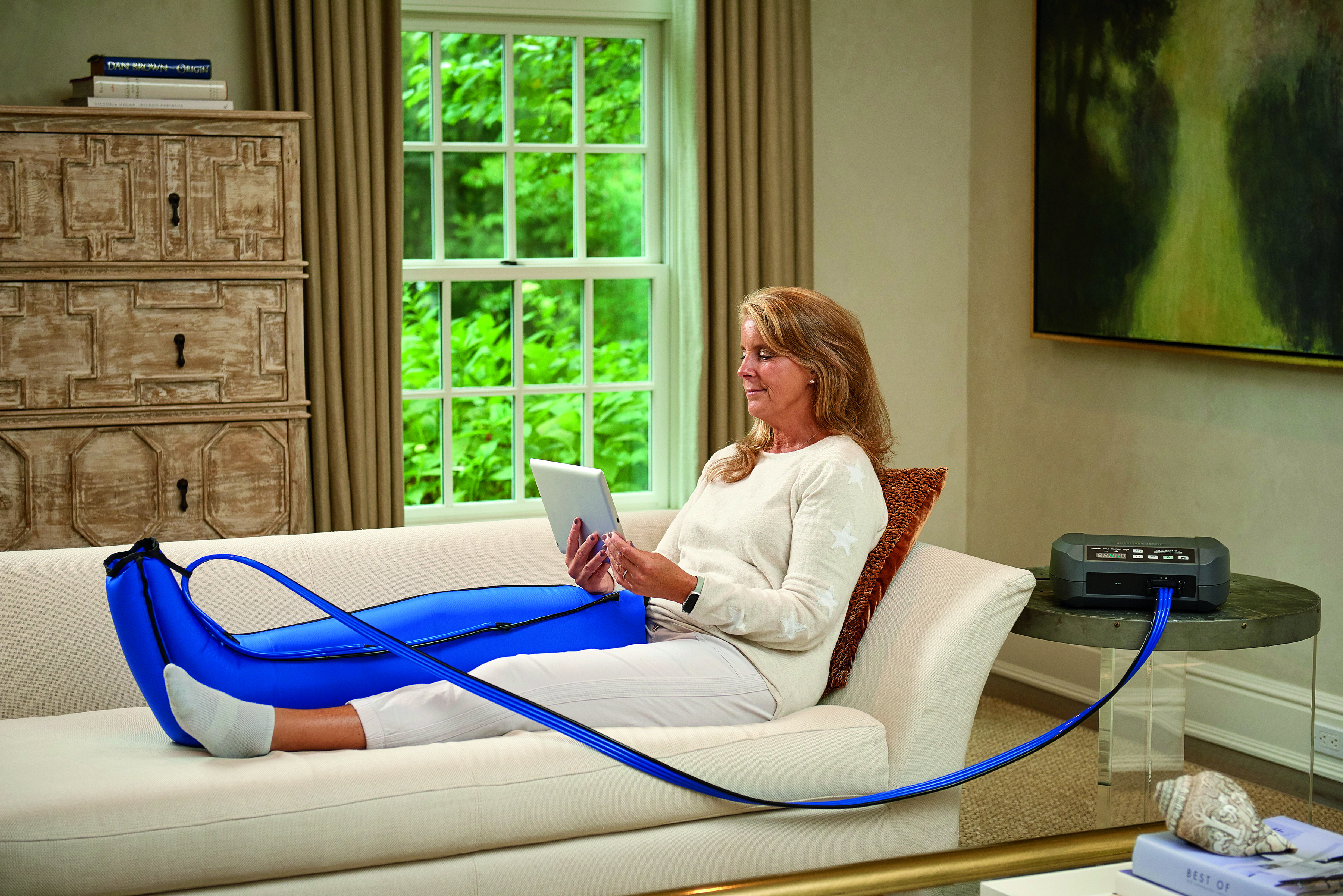
For patients whose lymphedema is not adequately controlled by compression garments and manual lymphatic drainage alone, a pneumatic compression device (PCD) is the next clinical step. MCB DME provides BioCompression Systems pumps — a New Jersey–manufactured, Medicare-covered device with over 40 years of clinical use.
The prescription pathway for pumps is distinct from garments and follows a separate Medicare benefit category. Here's what your documentation must establish:
1. Confirmed lymphedema diagnosis. Same ICD-10 documentation requirements as above.
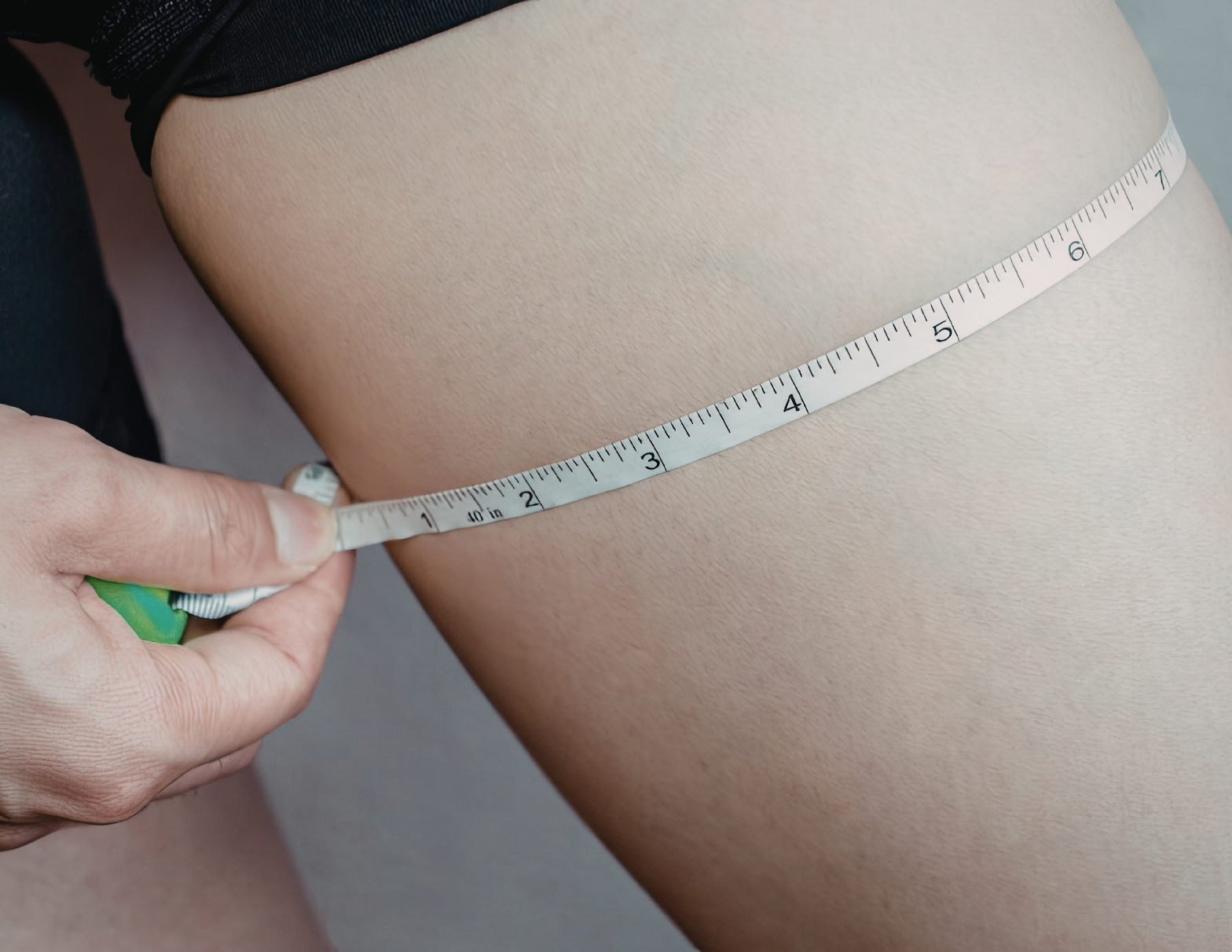
2. Documented trial of conservative therapy. A 4-week trial of conservative treatments must be attempted and documented before a pump prescription is written. During this trial, the patient must try elevation, exercise, and some form of compression bandaging or garments. After the trial, measurements of the affected limb should be taken and documented.
3. Documentation of inadequate response. Medicare requires your documentation to show that other treatments — compression garments, manual lymph drainage, or exercise — have not adequately controlled the patient's swelling. Objective findings such as measurable limb volume increases, skin changes, or repeated cellulitis episodes strengthen the case considerably.
4. A detailed Standard Written Order. Your prescription must explain why the pump is needed and how it will be used, and should include clinical findings, prior treatment attempts, and measurable goals for therapy.
5. Ongoing follow-up notes. Physicians may need to follow up and update Medicare with progress notes, and should coordinate with the DME supplier to ensure the pump model meets Medicare requirements. MCB DME proactively communicates with your office to flag when updated documentation is needed to avoid lapses in coverage.
Once the SWO is received, MCB DME coordinates all prior authorization, insurance verification, delivery, and in-home setup — including remaining with the patient for their first full treatment session to ensure proper use and comfort.
The 2026 Billing Compliance Update Affecting Your Referrals
A note for prescribers on what changed January 1, 2026: new billing modifiers are now mandatory on all lymphedema compression claims submitted to the DME MACs. The SC Modifier must be appended to all lymphedema compression treatment item claims when all statutory and reasonable and necessary requirements have been met. Claims submitted without one of the required modifiers — SC, GA, GY, or GZ — are rejected as missing information.
This is a supplier-side responsibility, not yours. But it has a direct implication for your referrals: your DME supplier must be current on 2026 CMS billing requirements, or your patients' claims will be rejected on technical grounds. MCB DME operates under full compliance with all 2026 Noridian Jurisdiction A billing and coding guidance, so your referrals clear on the first submission.
Also note: beginning January 1, 2026, New Jersey is one of six states participating in the Medicare WISeR prior authorization pilot program, which requires pre-approval for 17 specific procedures. Lymphedema DME is not currently on the WISeR list, but NJ physicians should be aware of the expanded prior authorization environment and confirm requirements with your DME partner before submitting any orders for complex DME categories.
What to Expect After You Send the Referral
Once your prescription reaches MCB DME, here is what happens — without any additional work from your office:
Insurance verification. We confirm Medicare enrollment, secondary coverage, and any Medicare Advantage plan-specific requirements (network enrollment, prior auth needs) before ordering anything.
Patient contact and scheduling. We reach out to the patient directly to schedule their fitting appointment at our Hawthorne office or, when appropriate, coordinate a home visit.
Fitting and measurement. Our certified fitters measure the affected limb(s), assess the patient's condition, and match them to the right garment type, compression level, and style — standard or custom as prescribed.
Claim submission. We submit all claims using the correct HCPCS codes, 2026 billing modifiers, and your diagnosis codes. Payment for all services associated with furnishing garments — including fitting and measurements — is included in the bundled payment to the DMEPOS supplier. There is no separate charge to you or your patient for the fitting.
Ongoing reorder management. We maintain reorder schedules for your patients within Medicare's frequency limits — daytime garments every 6 months, nighttime garments every 2 years — and reach out proactively when replacements are due.
Communication back to your office. If any additional clinical documentation is needed to support a claim, we contact your office directly and clearly — with a specific, targeted request — rather than sending your staff on a documentation scavenger hunt.
Quick Reference: Physician Documentation Checklist
Use this at the point of referral to ensure clean first-pass claim approval:
For compression garments:
Lymphedema diagnosis documented in medical record with correct ICD-10 (I89.0 / I97.2 / Q82.0)
Patient seen within the past 6 months
SWO includes: anatomical location, garment type (daytime/nighttime), compression level in mmHg, standard vs. custom, quantity
Clinical notes support medical necessity (severity, skin condition, functional impact, cellulitis history)
Custom garment justification note included if applicable
For pneumatic compression pumps:
All of the above, plus:
Documented 4-week conservative therapy trial with pre/post limb measurements
Documentation of inadequate response to garments and/or manual lymph drainage
Pump SWO includes: device type, treatment goals, and prescriber clinical rationale
Partnering With MCB DME for Your NJ Lymphedema Patients
MCB DME is a Medicare-enrolled DMEPOS supplier serving physicians and patients across Bergen County, Passaic County, and Northern New Jersey. We specialize in lymphedema compression therapy and BioCompression pump systems — and we handle every step between your signature and your patient's first treatment session.
We work directly with oncologists, primary care physicians, vascular surgeons, and lymphedema therapists throughout the NJ metro area. We understand the documentation language that keeps claims clean, and we make the referral process as frictionless as possible for busy practices.
To refer a patient or request our physician referral packet:
📞 (973) 553-0777
📍 293 Lafayette Avenue, Suite 104, Hawthorne, NJ 07506
Or visit our provider resources page for clinical reference guides, documentation checklists, and research on pneumatic compression therapy outcomes.
Your patients with lymphedema have waited long enough. With the right documentation and the right DME partner, their supplies can be covered — and their outcomes can improve.
MCB DME is a Medicare-enrolled DMEPOS supplier specializing in lymphedema compression garments, BioCompression pump systems, and durable medical equipment for patients across Northern New Jersey. This content is for informational purposes and does not constitute legal, coding, or billing advice. Clinicians should verify current CMS and DME MAC guidance for their specific patient circumstances.